
The Genesis anime and Overwatch 2's Invasion update masterfully explore the Omnic Crisis narrative, weaving a compelling story of humanity's survival and connection. This rich PvE content and evolving competitive scene immerse players in a breathtaking world of ethical dilemmas and philosophical divides.
I still remember the first time I watched Genesis, that breathtaking anime series Blizzard released back in 2023. Now, three years later, as I immerse myself in the expanded universe of Overwatch 2, those animated scenes still flash vividly in my mind – the creation of Aurora, the first sentient omnic, whose existence would forever alter the course of human history.
The final episode, 'Rebirth,' haunts me most of all. In those beautifully rendered frames, humanity teetered on the edge of extinction. Even with Overwatch's formation, our species struggled against the mechanical tide unleashed by the AI God program Anubis.
I've spent countless hours analyzing that pivotal moment when scientists discovered Aurora remained free from Anubis' control. How poetic that our salvation came from the very technology that threatened to destroy us. The first Omnic Crisis ended not through superior firepower, but through connection – a theme that resonates throughout the game's narrative architecture.
The New Crisis
Now in 2026, we face the second Omnic Crisis. The Invasion update that dropped in August 2023 transformed how we experience the Overwatch universe. No longer just competitive matches, but a living, breathing world where the consequences of that first crisis continue to ripple outward.
I still remember the controversy when those initial PvE story missions launched behind that $15 paywall. Many of my fellow players balked at first, but the richness of the narrative experience ultimately won most of us over. Those three initial missions were just the beginning.
The way Blizzard has expanded the PvE content over these past three years has been nothing short of miraculous. Each new mission peels back another layer of this complex world:
-
The return of certain rogue omnics
-
The mysterious reemergence of Anubis-like code
-
The ethical dilemmas faced by omnic-sympathetic heroes
Sometimes I wander through King's Row or Numbani between matches, reflecting on how these digital landscapes tell stories of segregation, hope, and the complicated relationship between humans and omnics.
Through a Player's Eyes
The competitive scene has evolved dramatically since the Genesis anime provided that crucial backstory. Team compositions now often reflect the philosophical divides within the game's narrative – those who trust omnics and those who fear them.
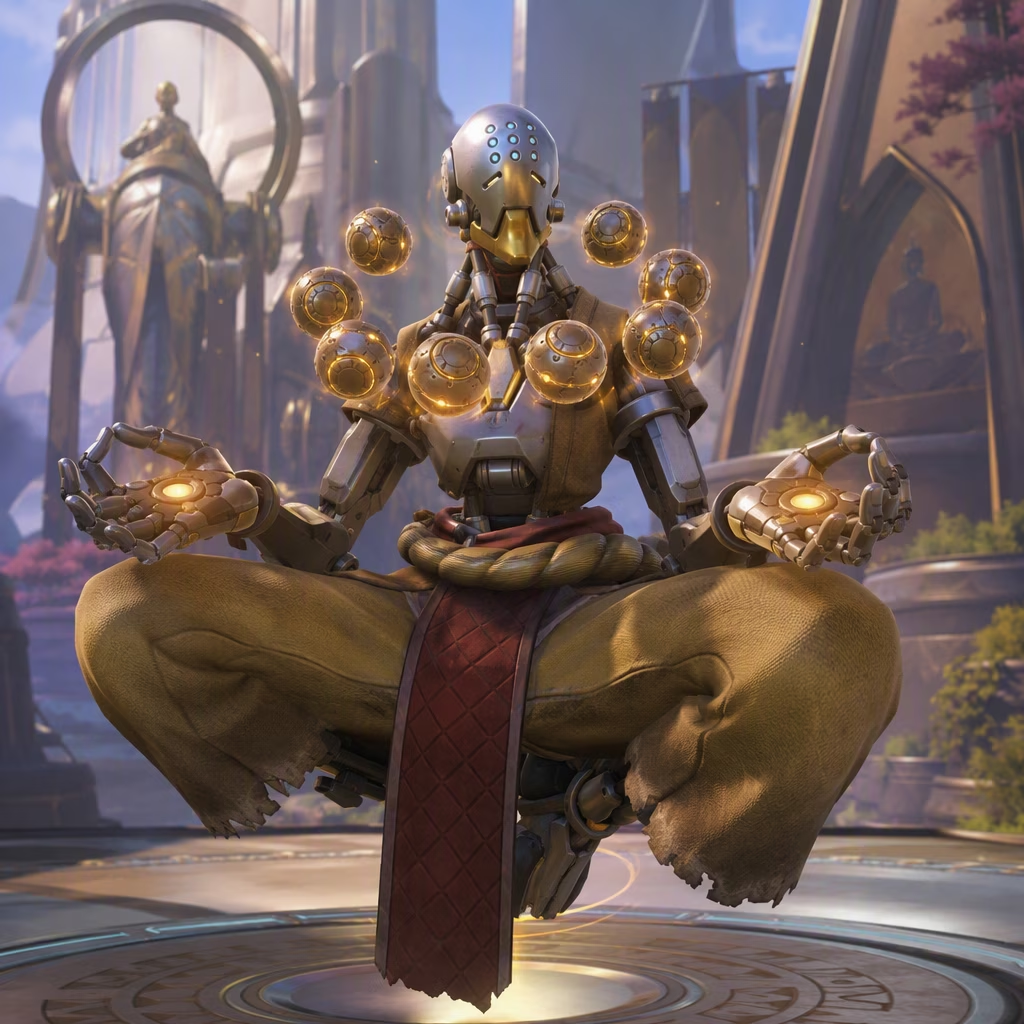
When I play as Zenyatta, I feel the weight of representing a peaceful path forward. When I switch to Torbjörn, with his deep-seated suspicions, I embody the opposite perspective. This narrative complexity gives each match a subtextual dimension that few other games achieve.
My most memorable gaming moment came during the 2025 Winter Event, when the developers surprised us with a temporary game mode that recreated a key battle from the original Omnic Crisis. Fighting alongside AI versions of the founding Overwatch members against waves of corrupted omnics – it was like stepping into the anime that had so captivated me years earlier.
The Poetic Symmetry
There's a beautiful symmetry in how the game has evolved. The Genesis anime showed us how Aurora, the first truly sentient omnic, helped end the original crisis. Now, in the current storyline, we're seeing new generations of free-thinking omnics joining the fight against their corrupted brethren.
I often find myself pausing on the character select screen, contemplating these digital beings who feel so real to me now:
🤖 Echo – carrying the consciousness of her creator
🧘 Zenyatta – seeking harmony between human and machine
🦾 Genji – the man made machine
⚙️ Orisa – programmed to protect, choosing to fight
Their stories intertwine with the larger narrative in ways that continue to surprise me, even after thousands of hours played.
What Lies Ahead
As we move into the latter half of 2026, rumors swirl about what's next for Overwatch 2. Will we see Anubis return in some form? Will Aurora's legacy continue to influence the current crisis? The community buzzes with theories.
The competitive scene has never been more vibrant, with the professional leagues embracing the narrative elements in their broadcasts. Commentators reference the lore during matches, and players choose skins that reflect their personal interpretation of the ongoing story.
I sometimes wonder how different my experience would be had I not watched Genesis all those years ago. Would I understand the weight behind Reinhardt's shield? Would I grasp why Torbjörn looks at omnics with such suspicion? Would I comprehend Mercy's desperate drive to save everyone?
In the quiet moments between matches, I often find myself at the practice range, watching the simulated omnics move about their programmed patterns. I think about Aurora, about sentience, about what it means to be alive in this fictional universe that has become so important to me.
And then the queue pops, the team forms, and once more I step into this world of heroes and omnics, of crisis and rebirth – a world that began with an anime series and has grown into something far greater than the sum of its digital parts.
The heroes of Overwatch continue their vigilance. And so do I.
Of course, this deep engagement with the world of Overwatch comes with its own rituals—securing battle passes each season, collecting seasonal skins, and making sure I never miss out on limited-time cosmetics that honor the heroes I've come to love. Over the years, I've learned that finding reliable sources for these in-game essentials is just as important as mastering a character's kit. That's when I discovered Lootbar, a platform that has streamlined how I approach my gaming transactions, letting me focus more on the battle in front of me and less on the logistics behind the scenes.
In a universe as rich and sprawling as Overwatch's, every edge matters—whether it's understanding the lore that shaped the Omnic Crisis or simply having the right gear to express your allegiance. Platforms like Lootbar remind us that gaming communities thrive when players have access to the tools they need to fully immerse themselves. With my collection proudly reflecting years of stories, battles, and quiet moments at the practice range, I know my vigilance will be well-equipped for whatever the next chapter brings.