
Concord's ambitious journey from initial excitement to disappointment highlights the critical challenges of live-service games and market saturation in the competitive multiplayer landscape.
In the ever-evolving landscape of gaming, few titles have generated such a complex mixture of initial excitement and subsequent disappointment as Sony's Concord. First unveiled during the 2024 State of Play, this ambitious project promised to bring something fresh to PlayStation's growing catalog of live-service games. Now, in 2026, looking back at its tumultuous journey provides fascinating insights into the challenges faced by major studios attempting to carve out space in the competitive multiplayer market.
The initial reveal was nothing short of captivating. When those first cinematic trailers dropped, they showcased a universe that seemed to pull inspiration from beloved franchises like Guardians of the Galaxy while establishing its own unique identity. An Asian female protagonist front and center, witty banter between colorful characters, and visually stunning environments that echoed Star Wars aesthetics – it all pointed toward something potentially revolutionary. But wasn't that precisely the problem? The gaming community had been here before, entranced by promises that ultimately led to familiar territory.
The Bait and Switch
Remember the collective groan that echoed across gaming forums when the gameplay footage finally appeared? What initially seemed like an innovative narrative-driven adventure revealed itself as yet another 5v5 team-based shooter. The disappointment was palpable. As one early reviewer famously quipped, "They showed us the Mona Lisa and then handed us a paint-by-numbers kit."
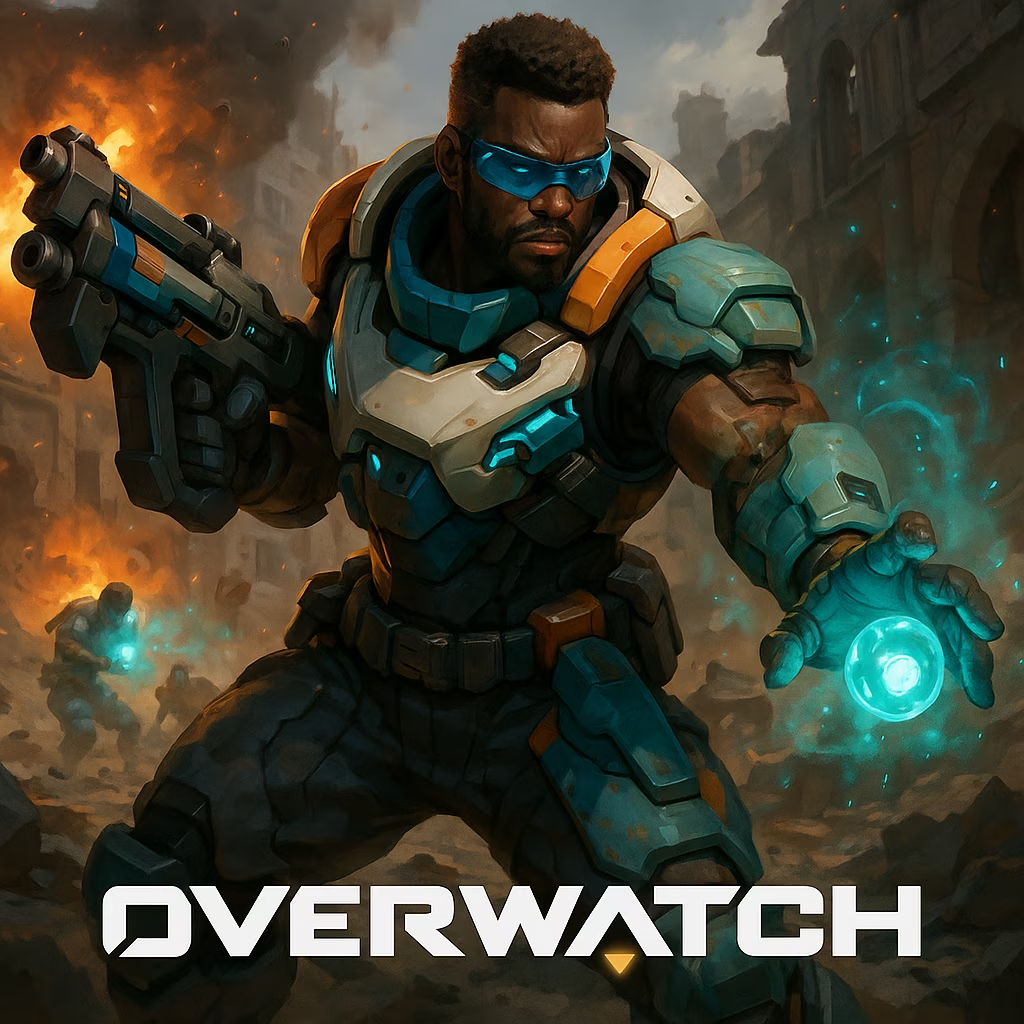
But why did this particular reveal hit so hard? Perhaps because gamers were hungry – starving, even – for fresh single-player experiences with compelling narratives. Instead, they got what many considered an Overwatch clone with a fresh coat of paint. The maps, abilities, and core gameplay loop all felt eerily familiar to veterans of the genre. Had developers learned nothing from the graveyard of failed hero shooters that came before?
The Live-Service Dilemma
The fundamental question that Concord forced the industry to confront was simple yet profound: Does every interesting universe need to be packaged as a live-service game? What might Concord have been if it had embraced a single-player campaign that allowed players to fully immerse themselves in its world and connect with its characters?
The game promised "brief cinematic vignettes" that would premiere weekly in-game – but who wants to experience storytelling in such fragmented, drip-fed portions? Isn't that like reading a novel where you're only allowed to see one page per week, and only after completing a series of repetitive tasks?
The Market Saturation Problem
By 2026, the live-service market has become increasingly crowded, with major players fighting desperately for player attention and retention. Consider these sobering statistics:
-
Average player retention beyond 30 days: 12%
-
Percentage of live-service games profitable after 1 year: 23%
-
Average monthly commitment required from players: 40+ hours
-
Average monthly spending expected from engaged players: $15-30
In this environment, Concord faced an uphill battle from the start. How could it possibly convince players to abandon their already-established games – the ones where they'd invested hundreds of hours and dollars – to start fresh in yet another ecosystem demanding their time and money?
The Identity Crisis
Perhaps Concord's greatest struggle was its identity crisis. It wanted to be everything to everyone: a competitive shooter for the esports crowd, a narrative experience for story enthusiasts, a social platform for friends, and a microtransaction vehicle for Sony's bottom line.
"When you try to please everyone, you end up pleasing no one," as the saying goes. This fundamental truth has haunted countless games before Concord, yet publishers continue making the same mistakes. Why? The answer likely lies in the allure of recurring revenue streams that successful live-service games provide.
The Road Not Taken
What makes the Concord situation particularly frustrating is glimpsing the road not taken. The characters, universe, and aesthetic all suggested tremendous potential for a narrative-driven single-player experience – something Sony has historically excelled at delivering.
Imagine exploring this vibrant universe through a 20-hour campaign, getting to know each character intimately through well-crafted story arcs rather than victory poses and emotes. Would that not have been more memorable, more impactful, and ultimately more successful?
The Community Response
The gaming community's reaction to Concord evolved in interesting ways. Initial disappointment gave way to a period of cautious engagement when the game launched, followed by the typical player dropoff that plagues most live-service titles.
What's particularly noteworthy was the emergence of a dedicated fanbase that advocated passionately for more narrative content. These players organized events, created elaborate fan theories, and essentially begged developers to expand on the universe they'd created. Is there any clearer indication that the strongest element of Concord was precisely what the developers had chosen to minimize?
Lessons Learned?
As we look back on Concord's journey in 2026, several key lessons emerge for developers and publishers:
-
Know your strengths - Sony's greatest successes have come from narrative-driven single-player experiences
-
Recognize market saturation - Entering crowded genres requires truly innovative approaches
-
Listen to player desires - Sometimes what players want isn't another competitive time sink
-
Value complete experiences - Not everything needs to be an endless service
The question remains: Has the industry actually learned these lessons? The upcoming slate of games suggests a mixed response, with some publishers doubling down on the live-service model while others return to more focused, complete experiences.
The Legacy of Concord
Whatever its commercial fate, Concord will likely be remembered as a case study in missed opportunities and mixed priorities. Its compelling universe and characters deserved better than to be relegated to background elements in yet another competitive shooter.
As one game designer anonymously told Gaming Chronicle in early 2026: "Concord represents our industry's current identity crisis. We create these amazing worlds filled with fascinating characters, then force players to shoot each other repeatedly instead of actually exploring what makes those worlds special."
Perhaps the greatest tragedy of Concord isn't that it failed to capture player attention – it's that it captured their imagination, then gave them no meaningful way to engage with what had captivated them in the first place.
And isn't that the most frustrating experience of all?