
The outrageous Pachimari keychain controversy highlights Blizzard's predatory pricing model in Overwatch 2, where digital cosmetics cost more than physical items, sparking community outrage over exploitative microtransactions.
I nearly spat out my energy drink when I discovered this absurdity! Four years since the infamous Pachimari keychain controversy first erupted, and Blizzard STILL hasn't learned their lesson. As a professional gamer who's dumped thousands of hours into Overwatch 2 since its launch, I thought I'd seen it all - but this latest pricing model has me questioning my life choices.
Let me take you back to the scandalous discovery that set the gaming community ablaze. The adorable onion-octopus mascot Pachimari, beloved by players worldwide, became the poster child for everything wrong with gaming monetization. The DIGITAL keychain charm costs more than the ACTUAL physical keychain you can hold in your hands! I'm not making this up, folks!
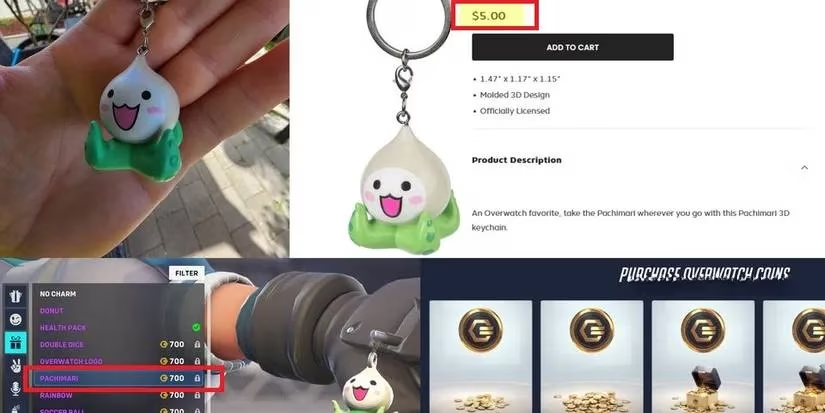
The real-world Pachimari keychain? A mere $5. The pixelated version that only exists in the game's code? A whopping 700 coins (roughly $7). BUT WAIT - it gets worse! Unless you've hoarded coins from weekly challenges or previous purchases, you're forced to buy coin packs that never match what you actually need. It's like going to the grocery store where everything costs $7, but they only sell money in $5 and $10 increments. MAKE IT MAKE SENSE! 🤯
The Math That Made Me Question My Sanity
I'm a gamer, not a mathematician, but even I can do this disturbing calculation. By completing ALL eleven weekly challenges (which, trust me, feels like a second job), you earn a pathetic 60 coins. At that rate, it takes TWELVE WEEKS of grinding just to earn enough for one digital keychain!
When I shared this revelation with my streaming community last week, the chat exploded:
-
😡 "This is highway robbery!"
-
🤑 "Blizzard executives laughing all the way to the bank"
-
💸 "I could buy an ACTUAL MEAL for the price of a digital charm"
The situation with hero cosmetics is even more ludicrous. Remember when someone calculated that unlocking all non-seasonal cosmetics for Kiriko would cost 15,600 coins? That's either five YEARS of gameplay or $140+ of real money. For ONE CHARACTER! I could buy multiple full-price games for that!
The Defense That Doesn't Defend
Now, I've heard all the corporate apologists try to justify this madness:
-
"But the game is free-to-play!"
-
"Developers need to eat too!"
-
"It's just cosmetic!"
Sure, I get it. Overwatch 2 is a premium product made by talented people who deserve fair compensation. But there's a difference between sustainable monetization and DIGITAL HIGHWAY ROBBERY. When your virtual trinket costs more than its physical counterpart, you've crossed into absurdity territory.
In my 15 years as a professional gamer, I've watched monetization models evolve from reasonable DLC to predatory microtransactions. But this? This is next-level audacity.
What's Changed in 2026?
Absolutely nothing! Despite community backlash reaching nuclear levels, Blizzard doubled down on their pricing model. The latest season introduced a charm that looks like a tiny coffee cup - $8 in-game, while the actual Overwatch-branded mug costs $7.50 at Target. I'm not kidding! I took photos of both and put them side by side during my stream last Thursday, and my viewers thought I was playing an elaborate prank.
The most painful part? I still bought it. We ALL did. Because despite our complaints, we love this game and want our characters to look cool. And Blizzard knows this, which is why they continue squeezing every possible penny from their player base.
The Psychological Warfare of Modern Gaming
Let's be real - this isn't just about overpriced digital keychains. It's about the psychological tactics employed to separate players from their money:
-
🎮 FOMO (Fear of Missing Out) on limited-time items
-
🎮 Deliberately mismatched currency packs
-
🎮 Battle passes that exploit our completionist tendencies
-
🎮 Social pressure when friends have cosmetics you don't
As someone who plays games for a living, I've developed a love-hate relationship with these tactics. I recognize them for what they are, yet still fall victim to them. Just last week, I dropped $25 on a skin bundle I didn't even particularly like, simply because it was "limited edition."
The gaming landscape of 2026 is a psychological minefield, and companies like Blizzard have mapped every inch of our gamer brains.
Despite everything, I'll be online tonight grinding those weekly challenges for my precious 60 coins. Because apparently, I enjoy punishment. Or maybe I'm just holding out hope that one day, digital Pachimari will cost less than real Pachimari, and balance will be restored to the universe.
Until then, I'll be here, complaining loudly while simultaneously feeding the very system I criticize. The true gamer paradox of our time. 😂