
Overwatch 2 Support heroes now shine with enhanced abilities and balanced queue times, making them dynamic playmakers in 2026.
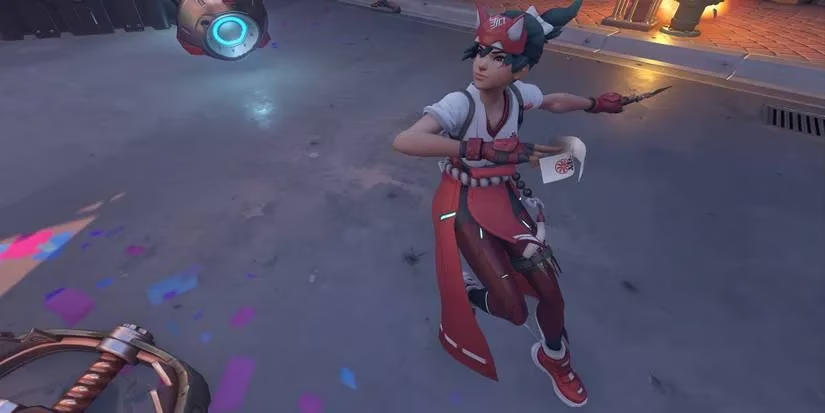
The landscape of Overwatch 2 has transformed dramatically since its initial launch in 2023. Back then, few players were eager to queue as Support heroes, despite the introduction of Kiriko with her innovative abilities and stylish design. Queue times for Tank and Damage roles stretched painfully long while Support remained readily available—a clear indicator of its unpopularity among the player base.
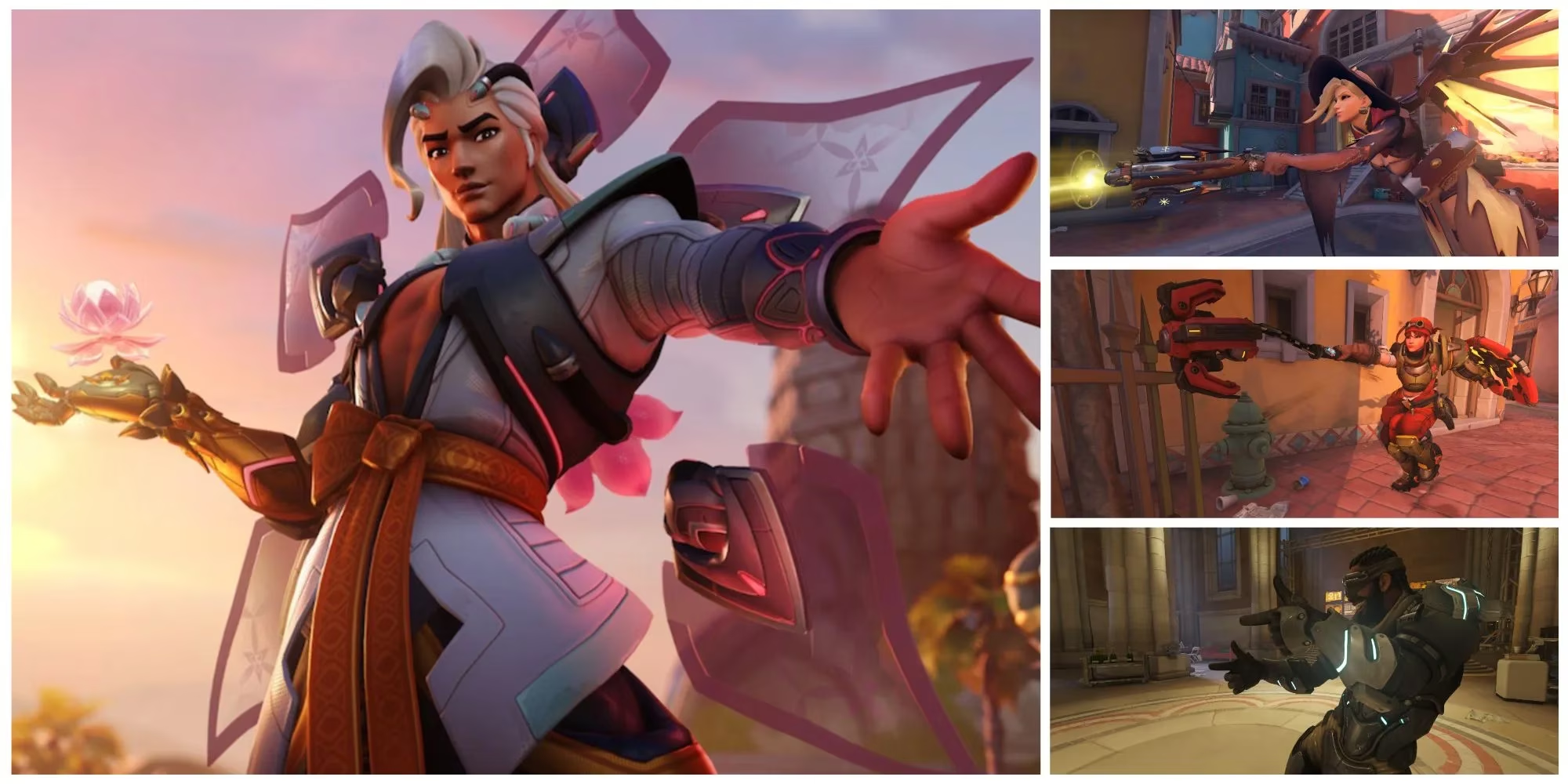
The reasons were obvious to veteran players. Support heroes were fewer in number compared to the 17 Damage options available. Tanks had become extraordinarily powerful in the new 5v5 format, being both difficult to eliminate and capable of dealing significant damage. This imbalance created a perfect storm where Support players became prime targets for elimination, with little protection from the now-absent second Tank. A Genji diving on a backline Zenyatta or Brigitte often resulted in quick, frustrating deaths for those brave enough to take on healing responsibilities.
Three years later, in 2026, the situation couldn't be more different.
Blizzard recognized this critical issue and made Support enhancement a major focus of their development efforts. Their approach has been multifaceted, combining subtle numerical adjustments with bold new mechanics that have fundamentally changed how Support heroes function in the competitive ecosystem.
Some changes were incremental but meaningful. Baptiste's Immortality Field now preserves allies at 25% health rather than the previous 10%, creating more opportunities for dramatic team saves. Brigitte received a 50-point health increase, bolstering her survivability. Moira gained the ability to recover energy through damage dealt with her orb—a change that rewarded aggressive play without sacrificing healing potential.
Other modifications were more revolutionary. Zenyatta's new melee ability—affectionately dubbed the "super kick" by the community—sends attackers flying backward when connected. This single change transformed him from easy prey for flankers into a hero with legitimate self-defense options. Brigitte's ultimate underwent a complete overhaul, now granting her a Reinhardt-sized shield capable of stunning entire enemy groups.
"Support heroes aren't just healers anymore—they're playmakers," explains professional Overwatch 2 player Maya "Healstorm" Chen. "The role has evolved to include crowd control, positioning advantages, and game-changing ultimate abilities that can reverse the tide of battle in seconds."
This evolution has produced remarkable results. Queue times across all roles have balanced out significantly by 2026, with players actively choosing Support rather than being forced into it. The role now attracts players seeking to make impactful plays beyond mere healing numbers.
While Moira remains the straightforward option for beginners—offering substantial healing and damage with relatively simple mechanics—the most satisfying Support moments now come from perfectly timed ability usage:
-
Deploying Baptiste's Immortality Field to save teammates from a Graviton Surge
-
Using Kiriko's Protection Suzu to cleanse status effects during a critical team fight
-
Executing a perfectly timed Resurrection on a fallen Tank just as they were about to secure the objective
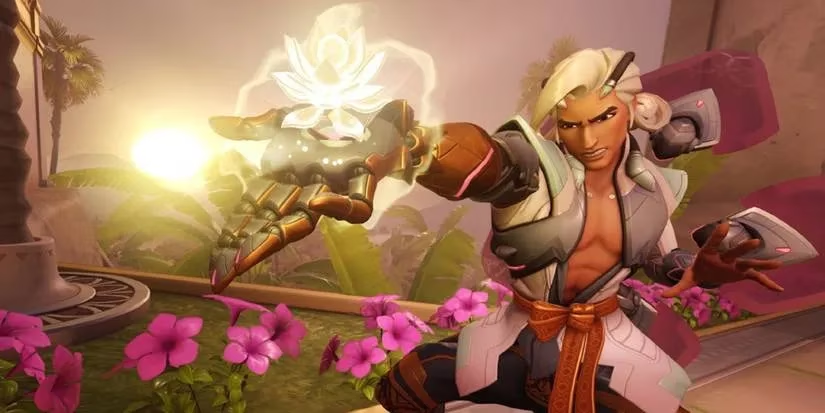
The introduction of Lifeweaver in 2023 represented a turning point for Support design philosophy. Though challenging for newcomers, his kit offered unprecedented utility for experienced players. His Life Grip ability, which briefly makes an ally invulnerable while pulling them to safety, created entirely new defensive possibilities:
-
Rescuing teammates knocked off ledges
-
Saving allies from normally fatal crowd control effects
-
Extracting teammates from ultimate abilities like Dragonstrike or Blizzard

The Support roster has expanded significantly since then. The 2024 addition of Oracle, a Support who manipulates time itself, further diversified the role. Her ability to create localized time dilation fields can slow enemies or speed up allies' cooldowns, introducing entirely new strategic dimensions to team compositions.
In 2025, Blizzard introduced Remedy, their first Support hero with resource management mechanics. Her healing potency scales with risk taken, rewarding aggressive positioning with enhanced support capabilities—a design philosophy that would have been unthinkable in the early days of Overwatch 2.
"The Support role has undergone the most significant transformation of any aspect in Overwatch 2," notes game director Aaron Keller in a recent developer update. "We've moved away from the idea that Supports should passively heal from the backline and instead embraced their potential as dynamic playmakers with unique tools to influence the battlefield."
This evolution has rippled throughout the game's competitive ecosystem. Professional matches now frequently highlight Support players making tournament-defining plays. The role's newfound popularity has also diversified the hero selection pool, with all Support heroes seeing meaningful play time at various skill levels.
The community has responded enthusiastically to these changes. Support-focused content creators have seen substantial growth in viewership, with tutorials on advanced Support techniques consistently ranking among the most-watched Overwatch 2 educational content.
Looking ahead to the remainder of 2026, Blizzard has hinted at continued innovation for the Support role. Upcoming balance changes aim to further refine the existing roster while maintaining the high-impact potential that has made the role so appealing.
For players who dismissed Support as merely "healers" in the past, the current state of Overwatch 2 offers a compelling reason to reconsider. The role now represents a perfect blend of responsibility, utility, and game-changing potential—perhaps even the most influential position on any team.
As one popular streamer recently put it: "In 2023, nobody wanted to play Support. In 2026, everybody argues over who gets to play Support. That's how you know Blizzard got something right."
The transformation is complete. Support heroes have evolved from the least desirable role to perhaps the most dynamic and impactful position in Overwatch 2. The healing continues, but now it comes with a side of game-changing plays that can leave both teammates and opponents in awe.