
The revolutionary free-to-play gaming model, exemplified by Fortnite's seismic impact, has transformed the 2026 digital landscape into a sophisticated ecosystem of lucrative, culturally dominant titles that have completely overshadowed traditional pay-to-play relics.
In the wild wilderness of 2026's gaming landscape, free-to-play titles have become the undisputed kings of the digital jungle, evolving from humble beginnings into monstrous money-making machines that dominate every platform imaginable. The transformation has been nothing short of revolutionary, leaving the ancient relics of "pay-to-play" games gathering dust in the virtual museum of gaming history.
From Zero to Hero: The Explosive Free-to-Play Revolution
Gone are the prehistoric days when "free gaming" meant downloading sketchy demos on Xbox 360 or playing ad-infested mobile games that bombarded players with pop-ups every thirty seconds. Today's free-to-play ecosystem has become so sophisticated that it makes those early attempts look like cavemen trying to invent the wheel. Talk about a glow-up that would make any Instagram influencer jealous! These games went from zero to hero faster than you can say "Battle Royale," and now they're absolutely CRUSHING IT in the gaming market.
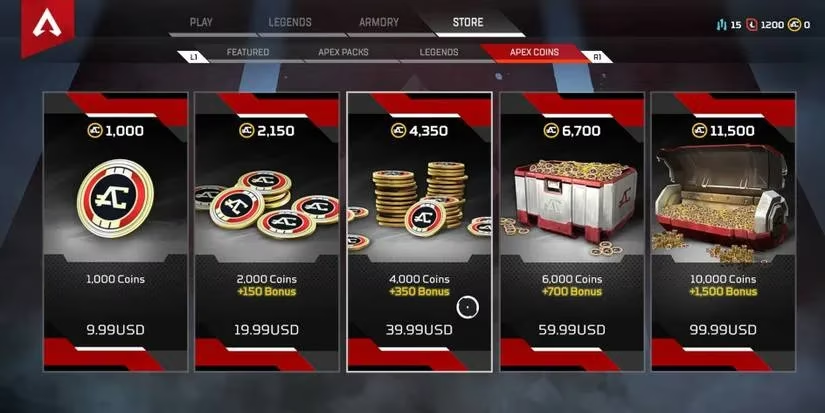
The journey from paid experiences to free-entry juggernauts didn't happen overnight. It took visionaries like Epic Games with Fortnite to show the industry how to make it rain V-bucks without charging players a dime upfront. Games like Apex Legends, Rocket League, and Fall Guys joined the party, proving that going free-to-play wasn't just a desperate last resort but a legitimate business strategy that could breathe new life into aging titles. Even Overwatch 2's controversial transition to the free model in the early 2020s now seems like ancient history – a necessary evolution in the survival of the fittest gaming world.
The Fortnite Effect: How One Game Changed Everything
If there's one game that deserves credit (or blame, depending on your perspective) for this seismic shift, it's Fortnite. This battle royale behemoth came out swinging and knocked the entire industry on its collective behind. When Fortnite Battle Royale launched as free-to-play while PlayerUnknown's Battlegrounds was still charging admission at the door, it was like watching one restaurant give away free samples while the competition charged for a taste test. No wonder Fortnite became the belle of the ball!
The game's Battle Pass system was so revolutionary it should have its own spot in the Innovation Hall of Fame. This brilliant monetization strategy spread through gaming faster than a viral TikTok dance, becoming as ubiquitous as terrible teammates in random matchmaking. By 2026, you'd be hard-pressed to find a multiplayer game without some version of this system – it's basically the gaming equivalent of putting pineapple on pizza, except everyone actually likes it!
Fortnite didn't just make money; it created a whole new cultural phenomenon. The game has had more collaborations than a music festival lineup, with everyone from Marvel superheroes to K-pop stars making an appearance. It's been a real "go big or go home" situation, and Fortnite definitely didn't go home!
The Economics of Free: How Games Make Bank Without Charging Admission
The economics behind free-to-play is absolutely mind-boggling. These games have mastered the art of making players open their wallets voluntarily – a trick that would make even the most skilled street magician green with envy. It's like they're saying, "Don't worry about paying now, we'll get your money later!" And boy, do they deliver on that promise!
Here's how the modern free-to-play ecosystem typically monetizes in 2026:
-
🎮 Battle Passes: The subscription-that's-not-a-subscription that has players grinding for exclusive rewards
-
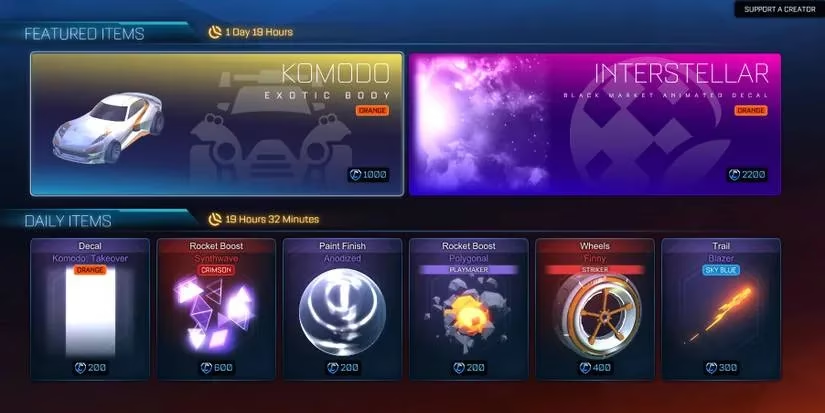
🎁 Cosmetic Items: Because looking fabulous while getting eliminated is apparently worth $20
-
🎲 Loot Boxes: The digital equivalent of gambling, but with virtual hats instead of cash prizes
-
⏱️ Time Savers: For players who want to skip the grind but still feel accomplished somehow
-
🎭 Limited-Time Events: Creating FOMO so powerful it should be classified as a psychological weapon
The genius of this model is that it makes spending optional but highly desirable. It's the gaming equivalent of saying "You can sit at our table for free, but if you want the good silverware, that'll cost ya!" And players are more than happy to pay for that premium cutlery, because YOLO, am I right?
The Social Media Symbiosis
The relationship between free-to-play games and social media has become tighter than spandex on a superhero. These games don't just exist as standalone products anymore – they're entire ecosystems that feed into the content creation machine. It's a match made in digital heaven!
By 2026, the integration has reached new heights:
| Platform | Role in Free-to-Play Ecosystem |
|---|---|
| TikTok | Short clips of epic gameplay moments and cosmetic showcases |
| Twitch | Live gameplay with direct in-game purchases through stream integration |
| YouTube | Strategy guides, update breakdowns, and reaction videos |
| Cosmetic showcases and esports athlete spotlights | |
| Virtual Reality Social Spaces | In-game viewing parties and virtual tournaments |
This symbiotic relationship is absolutely "poggers" as the kids were saying back in the day. Content creators get endless material, games get free marketing, and players get entertainment both in and out of the game. It's a win-win-win situation that has created an entire entertainment industry within an entertainment industry. Talk about inception!
The Dark Side of Free: When "Free" Costs More Than You Think
But hold onto your gaming chairs, folks, because this free-to-play paradise isn't all rainbows and legendary skins. There's a dark side to this model that would make Darth Vader himself say "That's a bit much."
The psychological tactics employed by these games have become so sophisticated by 2026 that they make casino slot machines look like child's play. The infamous "whale" hunting – targeting the small percentage of players who spend thousands – has only become more refined. Some free-to-play games now employ AI algorithms that can predict spending patterns and target vulnerable players with personalized offers that are harder to resist than grandma's cookies.
The mobile gaming market serves as a cautionary tale of what happens when free-to-play runs wild without restraint. It's become a digital Wild West where predatory monetization schemes run rampant, making the platform about as respected in hardcore gaming circles as a participation trophy at the Olympics.
The Future is Free (Sort of)
As we look toward the future from our vantage point in 2026, it's clear that free-to-play isn't just a trend – it's the new normal for multiplayer gaming. The model has proven too successful to abandon, with even the most traditional publishers jumping on the bandwagon faster than politicians changing positions during election season.
What we're likely to see in the coming years:
-
🚀 More AAA franchises transitioning to free-to-play models
-
🔄 Hybrid models that blend subscription services with free-to-play elements
-
🌐 Greater integration with metaverse concepts and digital ownership
-
⚖️ Increased regulation around monetization practices
-
🎭 More sophisticated personalization of monetization strategies
The single-player experience remains the last bastion of traditional pay-once gaming, though even these titles often incorporate optional microtransactions. The indie scene continues to thrive, offering alternatives to players seeking more traditional experiences without the psychological manipulation of free-to-play mechanics.
Conclusion: Free to Play, Pay to Win?
The free-to-play revolution has transformed gaming more dramatically than a Transformer on steroids. It's made games more accessible than ever before while simultaneously creating new barriers in the form of psychological manipulation and social pressure. It's democratized entry while creating new forms of digital inequality based on spending power.
Is this model sustainable in the long term? That's the million V-buck question. For now, the industry is riding this wave all the way to the bank, and players seem more than willing to keep the tide flowing. Whether we're witnessing the permanent evolution of gaming or just another phase in its ongoing development remains to be seen.
One thing's for certain – in 2026, free-to-play is king, and that crown is definitely not free. As they say in the gaming world, "GG EZ" to traditional monetization models – they never stood a chance against the free-to-play juggernaut. Game over, man. Game over.