
Overwatch 2 Season 6: Invasion revitalized the franchise with the groundbreaking solar support hero Illari and transformative Story Missions, marking a pivotal redemption for the game's future.
The gaming world witnessed a remarkable transformation when Overwatch 2 Season 6, aptly titled "Invasion," launched in August 2023. Now, almost three years later, looking back at that pivotal moment reveals how this content-packed season became the turning point that many players had desperately hoped for. The franchise was at a crossroads after Blizzard's controversial decision to scrap previously promised PvE content in May 2023, leaving fans disheartened and questioning the game's future. Season 6 arrived with the weight of expectations on its shoulders – either to be the final disappointment or the beginning of a redemption story that would echo through the years to come.
The Solar Support: How Illari Changed the Meta
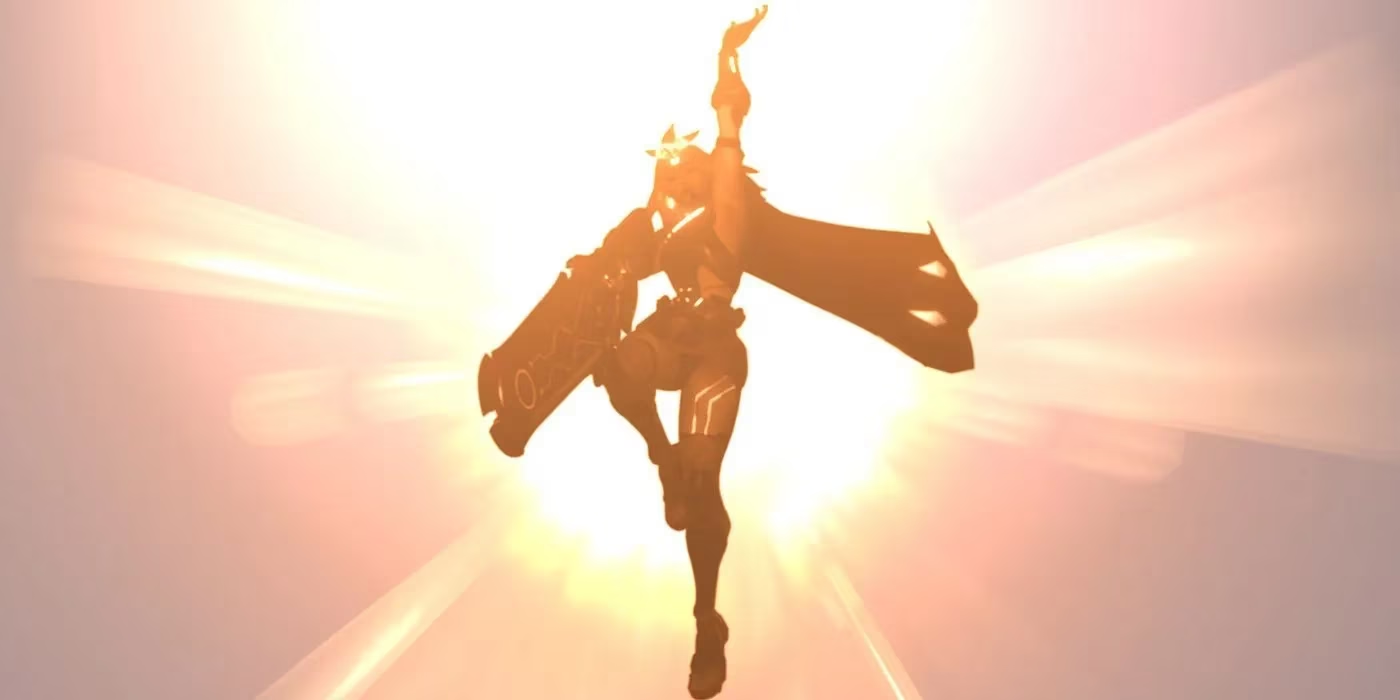
Season 6 introduced a game-changing support hero whose abilities harnessed the power of the sun. This solar-powered healer brought a fresh dynamic to team compositions with her unique blend of healing and offensive capabilities. Her introduction was shrouded in mystery initially, with Blizzard only revealing a silhouette against the sun, wielding what appeared to be a blade-like weapon.
The character's design drew inspiration from ancient solar worship rituals, as hinted by concept art titled "Solar Threading Ritual" that showed her floating within a golden circular contraption. This sun-based theme wasn't just aesthetic – it fundamentally shaped her gameplay mechanics and established her as a distinct presence on the battlefield.
"She really brought some much-needed sunshine to the support roster, didn't she?" became a common refrain among players who found her abilities refreshingly different from existing healers.
Story Missions: Narrative Evolution
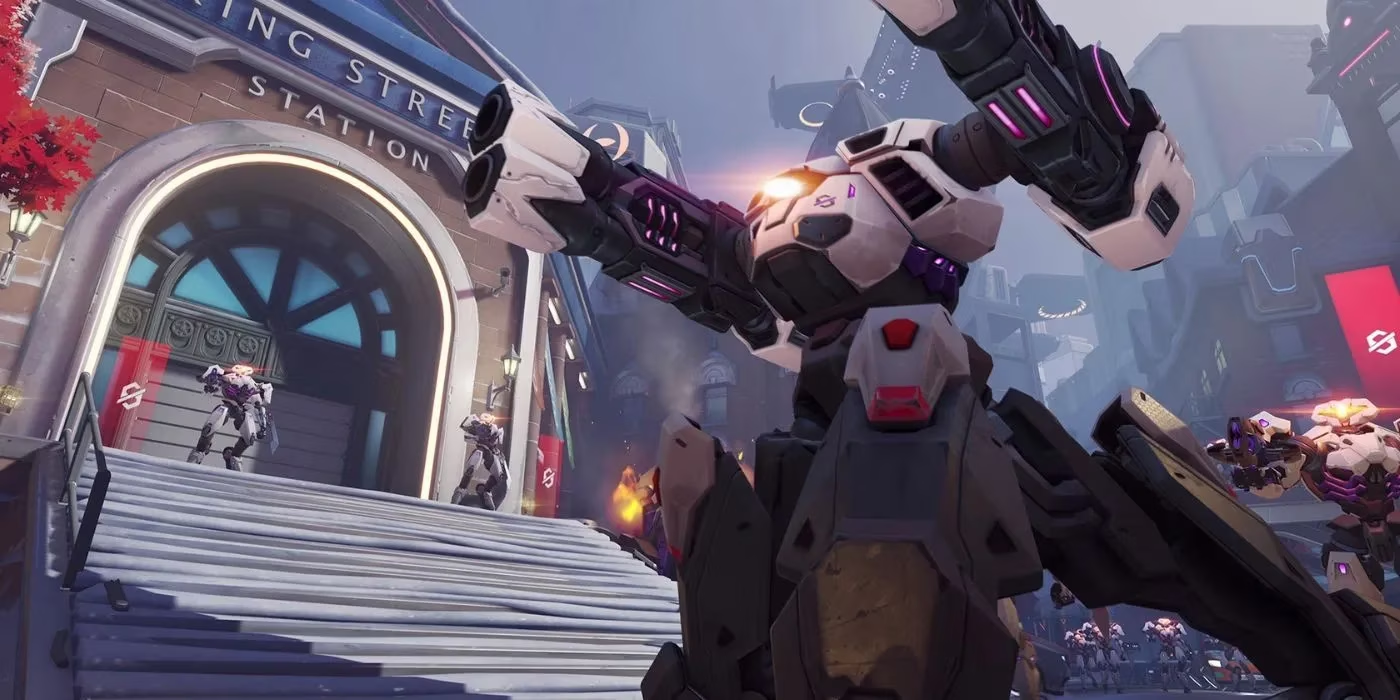
The introduction of Story Missions in Season 6 marked Overwatch 2's first serious attempt to deliver on its narrative promises after scaling back PvE plans. These missions transported players to expansive maps in Rio de Janeiro, Toronto, and Gothenburg, where they faced off against the robotic Null Sector forces in what became the game's most ambitious storytelling effort to date.
The missions featured new enemy types including Stalkers and Artillery units, creating varied combat scenarios that tested players' coordination and adaptability. While initially controversial for their $15 price tag (bundled with other content), these story experiences eventually proved their worth by providing crucial context to the evolving Overwatch universe.
The narrative threads established in these missions have continued to weave through subsequent seasons, creating a more cohesive world that players feel invested in. The missions weren't perfect – nothing ever is – but they laid the groundwork for the more sophisticated storytelling that Overwatch players enjoy today in 2026.
Flashpoint: A Mode That Redefined Competition
Season 6's introduction of Flashpoint mode on the massive new maps Suravasa and New Junk City fundamentally changed how players approached objective-based gameplay. These sprawling battlegrounds, the largest PvP maps in Overwatch 2 at that time, created opportunities for strategic depth that hadn't been possible on smaller maps.
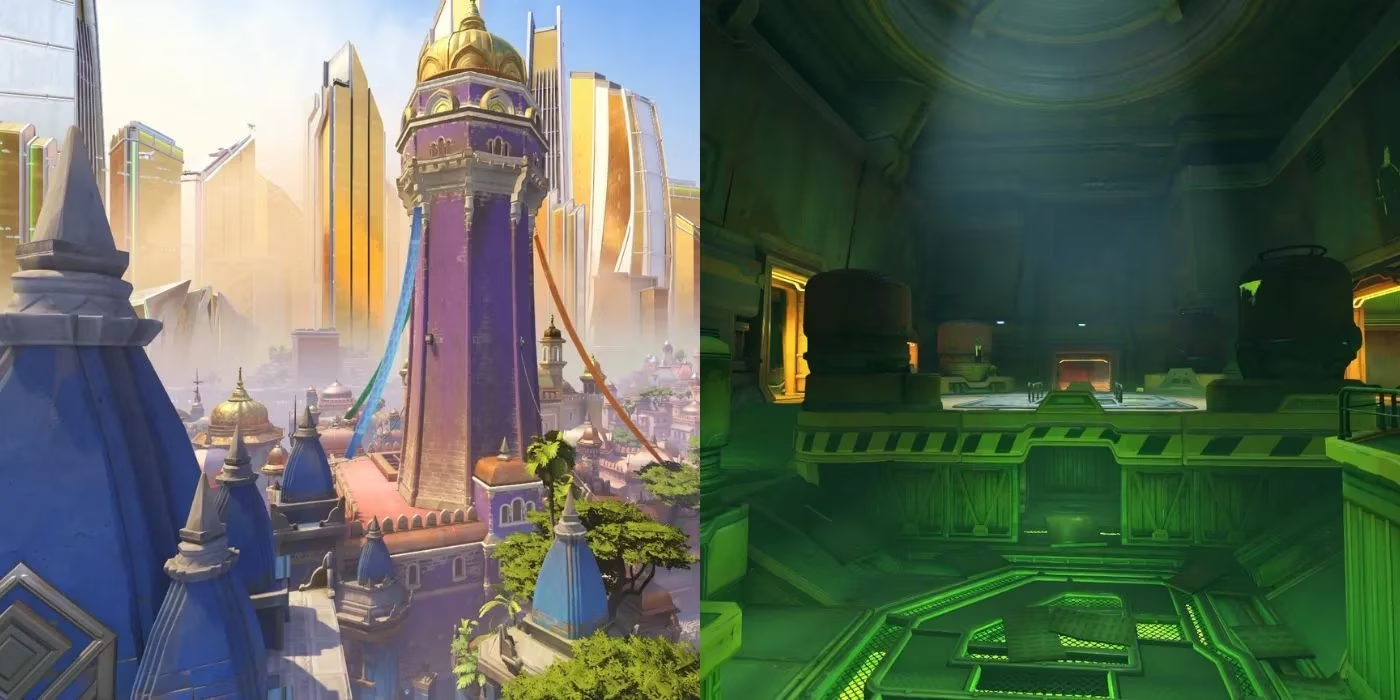
Flashpoint required teams to fight for control of key positions across these expansive maps, encouraging dynamic positioning and team coordination. The mode's success stemmed from how it balanced the importance of individual skill with team strategy, creating memorable moments where a single well-timed ultimate could shift momentum, but only within the context of a coordinated team effort.
The community quickly embraced Flashpoint, with many players feeling that it captured the essence of what made Overwatch special in the first place – the delicate balance between individual heroics and team synergy.
Beyond the Battlefield: Quality-of-Life Improvements
Season 6 wasn't just about new heroes and game modes – it brought substantial improvements to the player experience through features that had been long requested:
-
Hero Mastery System: Introduced character-specific challenges that provided structured ways to improve with individual heroes
-
Revamped Practice Range: The firing range received adjustable settings allowing for customized training scenarios
-
Global Leaderboards: Competitive players could measure their hero-specific skills against others worldwide
These additions might seem small compared to new maps and heroes, but they addressed fundamental aspects of the player experience. The Hero Mastery system, in particular, gave players clear pathways to improvement and recognized skill development in ways that standard matches couldn't.
The Battle Pass Evolution
Season 6's Battle Pass centered around the Null Sector theme, complementing the Story Missions with thematically consistent rewards. The pass featured the usual mix of free and premium tiers, but with noticeably improved quality in the cosmetics offered.
The Mythic skin introduced in this season became one of the most sought-after cosmetics in the game's history, with its reactive elements and customization options setting a new standard for what players expected from top-tier rewards.
Community Revival
Perhaps the most significant impact of Season 6 wasn't any specific feature but the renewed sense of community it fostered. After months of uncertainty and disappointment, players returned to find a game that felt alive with possibilities. Engagement metrics soared, content creators who had abandoned the game returned, and social media buzzed with discussions about strategy and lore.
"You know what? This season actually makes me feel like Overwatch is back," became a common sentiment across forums and Discord channels. That enthusiasm wasn't just momentary – it established a foundation of goodwill that Blizzard has carefully maintained through subsequent seasons.
Legacy of Invasion
Looking back from 2026, it's clear that Season 6 represented a pivotal moment for Overwatch 2. While the game has evolved considerably since then, with numerous heroes, maps, and modes added to the rotation, many of today's most beloved features can trace their origins to innovations introduced during Invasion.
The season wasn't perfect – some balance issues emerged with the new hero, certain Story Mission segments felt repetitive, and monetization remained a point of contention. But these flaws were overshadowed by the genuine sense that Blizzard had recommitted to the game's success.
For a franchise that once seemed to be fading into irrelevance, Season 6 provided the spark that reignited passion among its player base. Three years later, that flame continues to burn brightly, fueled by the foundation established during that crucial season when Overwatch found its way again.
In the ever-changing landscape of competitive gaming, Overwatch 2's Invasion season stands as a testament to how the right combination of content, community engagement, and creative vision can revitalize even the most troubled games.
And sometimes, that's all a game really needs – not perfection, but proof that someone still cares.