
Overwatch 2's Competitive mode evolution was driven by the community's fierce outcry over its opaque ranking system and abandonment penalties, leading to pivotal developer acknowledgments that reshaped the beloved shooter's future.
In the gaming world of 2026, Overwatch 2 enthusiasts continue to reminisce about the tumultuous journey of the game's Competitive mode. Looking back at the pivotal moment when developers finally acknowledged the community's grievances, we can see how it shaped the evolution of this beloved shooter.
Back in the day, players were vociferous in their dissatisfaction with Overwatch 2's Competitive mode, primarily due to its baffling opacity regarding player rankings. This stood in stark contrast to the original Overwatch's crystal-clear Skill Rating (SR) system that gamers had grown accustomed to and appreciated. The sequel's decision to replace the straightforward SR with ambiguous tiers left many scratching their heads in bewilderment.
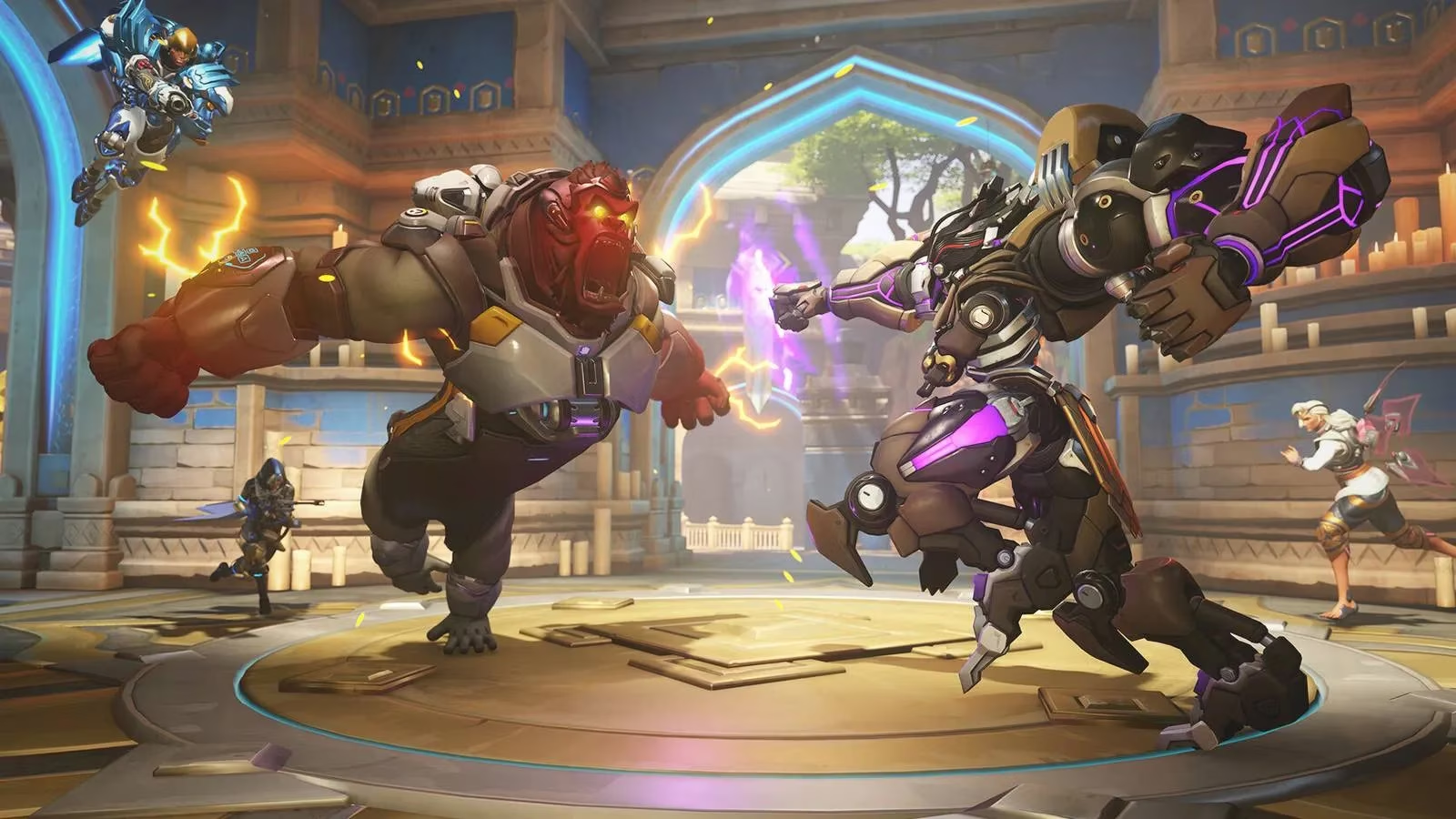
The Frustrating Ranking System
The exasperating ranking mechanism required players to triumph in five matches before receiving any inkling of their competitive standing. This tortuous waiting game replaced the immediate feedback loop of the original game, where players could track their progress after each individual match, win or lose. The community's patience wore thin as they were forced to play a guessing game about their exact rank and proximity to advancement.
As one veteran player humorously put it, "It's like running a marathon with all the mile markers removed and a blindfold on your face. Sure, you're moving, but where to? Nobody knows!" 😅
Developer Response: Better Late Than Never
In a moment that would become pivotal in Overwatch 2's history, developers Aaron Keller and Jared Neuss finally broke their silence and acknowledged the elephant in the room. They confirmed that substantial modifications to the Competitive mode were indeed in the pipeline, though they remained frustratingly vague about the timeline.
Neuss's candid admission that "the system needs a major update" resonated with players, though the response was decidedly mixed:
-
👍 Optimistic players: Welcomed the acknowledgment as a step in the right direction
-
👎 Skeptical veterans: Questioned the lack of urgency and concrete details
-
🤔 Fence-sitters: Adopted a "wait and see" approach
Beyond Ranking: Additional Competitive Woes
The ranking system wasn't the only thorn in players' sides. The community vocally advocated for more severe consequences for match abandonment in Competitive play. When teammates prematurely exited matches, the remaining players were left at a significant disadvantage for the duration of the contest.
This issue was particularly infuriating in Competitive mode compared to Unranked, as players risked:
-
Deranking
-
Wasted time
-
Diminished team morale
-
Inevitable defeat
| Issue | Original Overwatch | Overwatch 2 (Pre-Update) |
|---|---|---|
| Rank Visibility | Clear SR after each match | Hidden until 5 wins |
| Rank System | Numerical SR | Ambiguous tiers |
| Feedback Loop | Immediate | Delayed |
| Player Satisfaction | Generally positive | Overwhelmingly negative |
The PvE Distraction
While the competitive community simmered with discontent, Blizzard attempted to divert attention with the long-awaited PvE mode. The Underworld event offered novel gameplay experiences, but for many dedicated players, it was merely a shiny distraction from the competitive core that needed urgent attention.
"It's like being served a fancy appetizer when what you ordered was a proper main course," quipped one forum regular. "Sure, the PvE is tasty, but it's not what we're hungry for."
The Road to Redemption
Looking back from our 2026 perspective, this acknowledgment from the developers marked a turning point in Overwatch 2's competitive journey. The promised Director's Take column that followed became a blueprint for the transformative changes that would eventually reshape the competitive experience.
The development team's willingness to listen—albeit belatedly—to their player base demonstrated an important lesson in game development: even the most polished gameplay mechanics cannot compensate for systems that lack transparency and player agency.
For competitive gamers across Nintendo Switch, PC, PlayStation 5, PlayStation 4, and Xbox Series X platforms, this moment represented more than just promised changes to a game mode—it symbolized the power of community feedback in shaping the evolution of a beloved franchise.
As we continue to enjoy the refined competitive experience of Overwatch 2 in 2026, it's worth remembering the bumpy road that brought us here and the passionate community that refused to settle for less than what they deserved. 🎮