
Overwatch 2's divisive evolution and nostalgic original cinematic highlight a bittersweet journey for fans, reigniting debates over the sequel's free-to-play model and lost prestige. This accidental rediscovery underscores the game's struggle to recapture its revolutionary magic.
In an era where gaming sequels often promise evolution but deliver revolution, one Overwatch 2 player recently experienced a bittersweet trip down memory lane. After accidentally deleting the game from their PlayStation 4, they were unexpectedly greeted with the iconic "Are You With Us?" cinematic teaser from the original Overwatch upon reinstallation—a Winston-led narrative that once served as the emotional gateway to Blizzard's groundbreaking hero shooter.
Like finding an old love letter tucked between forgotten book pages, this chance encounter with Overwatch's original opening cinematic struck a powerful nostalgic chord within the community. The moment spread across Reddit like wildfire, igniting conversations about what many players perceive as a golden era now lost to time.
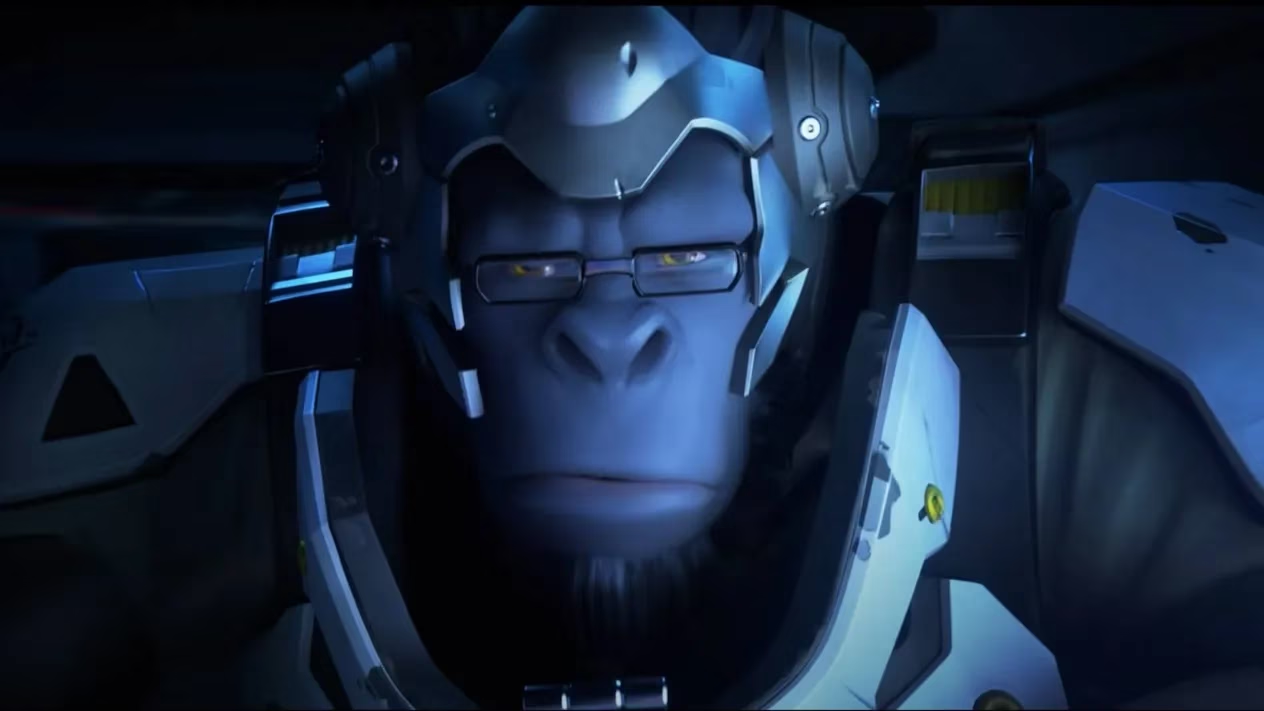
Four years into Overwatch 2's lifecycle, the sequel continues to divide the fanbase like a schism in a once-united religion. Released in late 2022 as a replacement for its predecessor, Overwatch 2 made fundamental changes that still spark heated debate: the shift to five-on-five matches from the original six-versus-six format, and the adoption of a free-to-play model that, for many players, feels like trading a gourmet meal for an all-you-can-eat buffet—technically more food, but somehow less satisfying.
Despite Blizzard's diligent efforts to polish and expand the experience through regular updates, new heroes, and balance adjustments, Overwatch 2 has struggled to maintain the magnetic pull that made its predecessor a cultural phenomenon. This decline isn't merely anecdotal—Activision Blizzard's financial reports through 2025 consistently showed diminishing player counts and reduced "player investment," corporate-speak for the uncomfortable reality that fewer people are spending money in the game.
The Ghost of Overwatch Past
The Reddit post by user yosukemybeloved serves as a fascinating time capsule. Because they still had the original Overwatch disc in their PS4 when reinstalling, the system triggered the classic opening cinematic rather than Overwatch 2's introduction. This technological quirk became a portal to 2016, when Overwatch first captured the imagination of millions.
Community responses to this accidental nostalgia trip revealed the depth of emotion still attached to the original game:
-
"Sorry for all the times I skipped you Winston" - one player apologized, humanizing their relationship with the game's opening sequence
-
"It felt...prestigious in a way? Mystic, maybe." - another fan attempted to articulate the ineffable quality that made the original special
The consensus emerging from these conversations paints Overwatch 1 as a comet that blazed brilliantly across gaming's sky—a phenomenon that, like a desert bloom that appears once in a decade, may never be replicated in quite the same way.
The Evolution of a Hero Shooter
Overwatch 2 exists in a gaming landscape that has transformed dramatically since 2016. The hero shooter genre, once fresh as morning dew, has become crowded like a subway car at rush hour. Battle passes and seasonal content models have become industry standards rather than innovations. In this context, Overwatch 2's struggle to recapture the magic feels almost inevitable.
What made the original Overwatch so captivating wasn't just its gameplay mechanics, though those were certainly polished to a mirror shine. It was the complete package: the mysterious world-building, the cinematic shorts that rivaled Pixar in emotional impact, and a monetization model that felt respectful of player time and investment.
The original game's approach to storytelling through those animated shorts created a powerful connection between players and characters. Winston's call to reassemble Overwatch wasn't just a narrative device—it was an invitation to players to become part of something larger than themselves. This emotional investment is difficult to replicate in the more transactional relationship of a free-to-play model.
Looking Forward While Remembering the Past
As we move through 2026, Overwatch 2 continues to evolve. The recent Genesis and Invasion story campaigns have attempted to recapture some of the narrative magic that made those early cinematics so compelling. The Overwatch 2 anime series has carried forward the storytelling tradition, though opinions vary on whether it captures the same essence.
For veterans of the original game, moments like the accidental rediscovery of Winston's call to arms serve as powerful reminders of what once was. These memories aren't merely nostalgia for nostalgia's sake—they represent genuine connections to experiences that shaped gaming culture.
The relationship between Overwatch and Overwatch 2 mirrors that of siblings with very different personalities born to the same parents. They share DNA but have grown in different directions, influenced by changing environments and expectations.
The Legacy Continues
While players can no longer access the original Overwatch in its complete form, its influence remains undeniable. The characters, world, and core gameplay elements live on, even if they've been recontextualized. For many players, that's both the tragedy and comfort of gaming evolution—nothing stays exactly the same, but elements of what we loved continue forward.
The story of this accidental nostalgia trip reminds us that games are more than code and assets—they're emotional touchstones in our lives. Like finding an old yearbook or hearing a song that defined a summer long past, these connections to gaming experiences past can hit with unexpected emotional force.
As Overwatch 2 continues its journey on PC, PS4, PS5, Switch, Xbox One, and Xbox Series X/S, it carries forward both the burden and blessing of its predecessor's legacy. For those who were there in 2016, Winston's question—"Are you with us?"—will always carry a special resonance, a reminder of a time when the answer was an enthusiastic, unqualified "yes."