
Overwatch 2 and monetization disappoint fans with broken PvE promises and aggressive battle passes, overshadowing its competitive legacy.
I still remember the excitement I felt back in 2019 when Blizzard announced Overwatch 2 at BlizzCon. As someone who had dedicated thousands of hours to the original game, competing at the highest levels, I was thrilled by the promise of an expanded universe with deep PvE content, character progression, and fresh competitive experiences. Fast forward to 2026, and I'm left reflecting on what might be one of gaming's most disappointing evolutions.
Coming up on four years since its October 2022 launch, Overwatch 2 has become the poster child for how monetization can overshadow a game's potential. The journey has been... complicated, to say the least.
The PvE Dream That Never Was
"Trust me," I told my stream followers back in 2020, "the PvE in Overwatch 2 is going to change everything." I had bought into the vision completely - a robust story mode with character progression, talent trees that would let us customize our favorite heroes, and meaningful expansion of the rich lore that had always existed on the periphery.
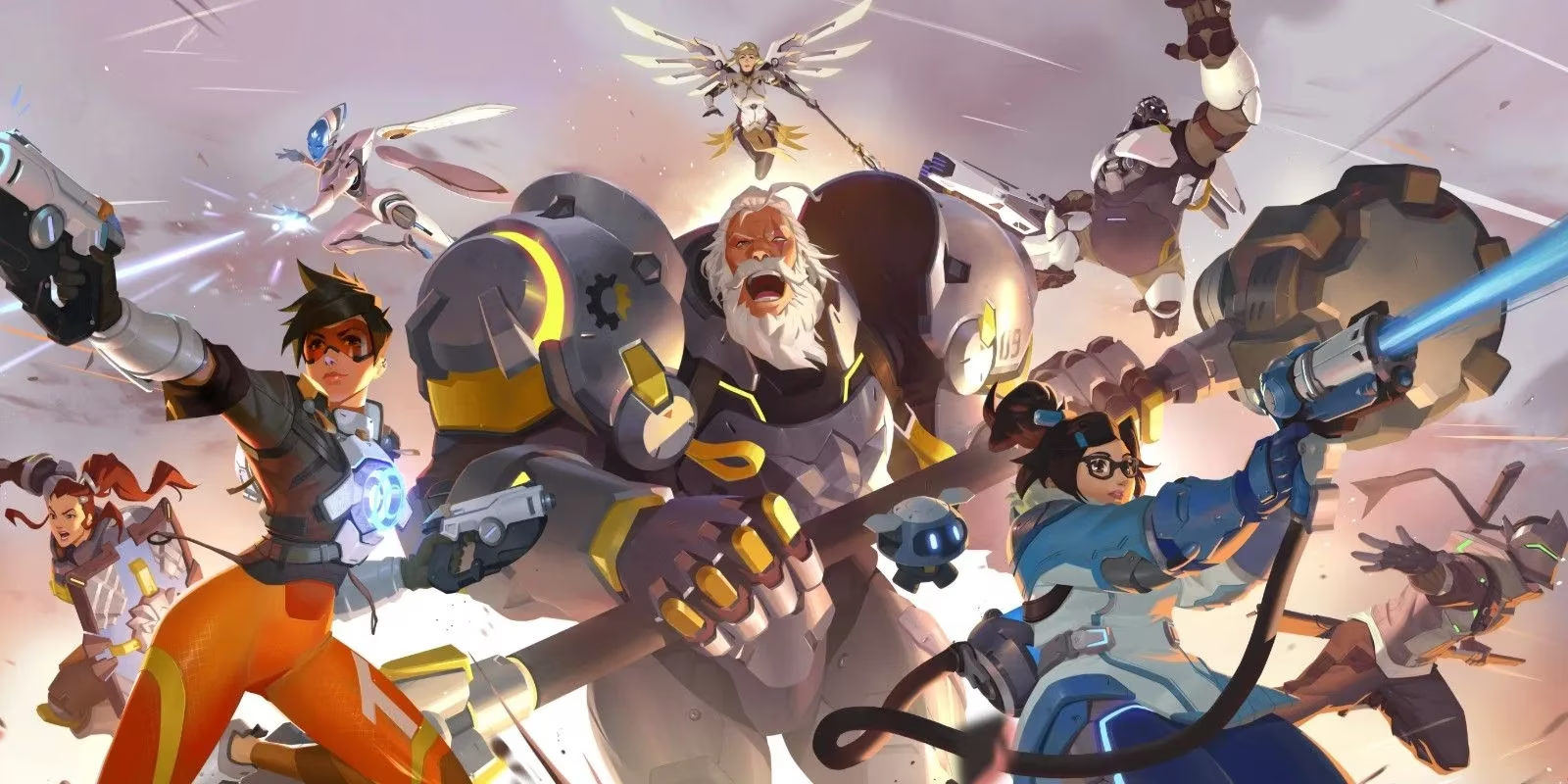
Then came that fateful Twitch stream in 2023. I was actually live-reacting when the dev team announced they were scrapping the promised PvE Hero mode. The chat went wild - and not in a good way. I remember sitting there, stunned into silence, as they explained how development challenges had forced them to redirect resources.
Sure, we eventually got some story missions, but they were shadows of what was promised. The talent system? Completely abandoned. That deep progression system that would have given us reasons to return to PvE content again and again? Gone without a trace.
From Loot Boxes to Something Worse
Don't get me wrong - the original Overwatch's loot box system wasn't perfect. I spent more money than I'd like to admit trying to get certain legendary skins. But at least I could earn boxes through regular gameplay.
The free-to-play model of Overwatch 2 initially seemed promising. "Everyone can play!" I remember saying optimistically in my first impressions video. But that accessibility came with a steep price.
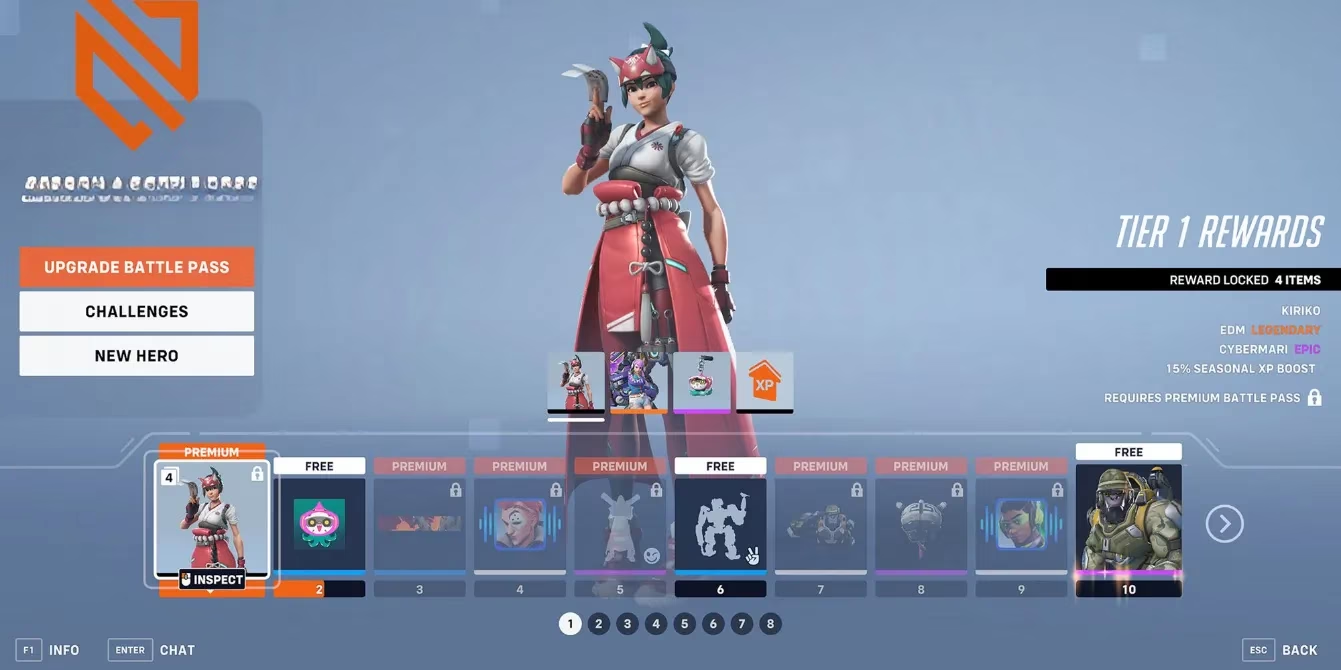
Four years later, the monetization feels more aggressive than ever. Battle passes that require serious grinding, a shop with $20+ skins, and the most controversial change - locking new heroes behind progression walls. As someone who competes at high ranks, this last point particularly stings.
"How can you have a competitive game where countering enemy picks is crucial, but not everyone has access to the same roster?" I ranted during a particularly frustrating stream last month. "It's fundamentally broken!"
The Original Game We Can't Go Back To
One of the most painful aspects of this whole saga is that the original Overwatch - a game I poured my heart and soul into - simply doesn't exist anymore. When Overwatch 2 launched, it completely replaced its predecessor.
I miss 6v6 matches. I miss the old tank synergies. I miss the pace of play that felt more strategic and less frenetic. Some days I find myself watching old tournament VODs from 2018 and 2019, feeling nostalgic for a game that's been erased.
"Remember when Rein-Zarya combos were the backbone of coordinated play?" I asked my duo partner during a recent stream. "Now it's just one lonely tank getting melted while DPS players run wild."
The 5v5 format has its fans, and I've adapted my playstyle accordingly, but it represents a fundamental shift in the game's identity that we never got to vote on. The old game is gone, and we're left with no choice but to accept the new reality or move on entirely.
The Financial Success That Players Pay For
Let me share some behind-the-scenes insight as someone who's been in numerous calls with developers and other pro players over the years. The shift to Overwatch 2's model wasn't just about creating a better game - it was about creating a more profitable one.
And on that front, it's been successful. Quarterly earnings calls regularly highlight how much more revenue Overwatch 2 generates compared to its predecessor. The battle pass model, the shop, the FOMO-inducing limited-time cosmetics - they all contribute to a steady stream of income.
But at what cost to the soul of the game?
Finding Joy Despite Disappointment
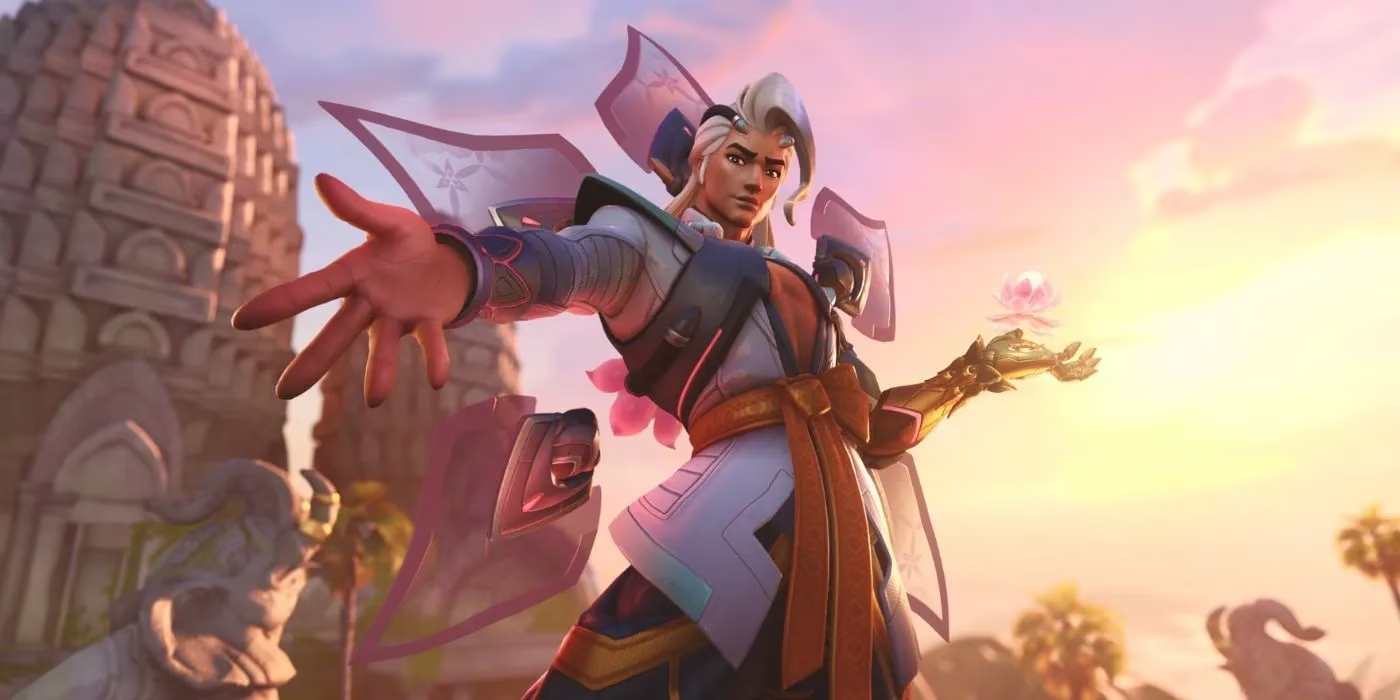
Despite my criticisms, I still play Overwatch 2 almost daily. The core gameplay loop - when separated from the monetization issues - remains uniquely satisfying. There's still nothing quite like landing a perfect Pulse Bomb as Tracer or sleeping an ulting enemy as Ana.
The seasonal content updates do bring fresh experiences:
-
🌟 New maps that offer interesting strategic possibilities
-
🦸♀️ New heroes (if you're willing to grind or pay for them)
-
🎮 Limited-time game modes that occasionally recapture the fun of the original
But these bright spots are consistently overshadowed by what could have been. Every new cosmetic locked behind a paywall, every promised feature that never materialized, every balance change that seems designed around the professional scene while ignoring the average player - they all remind us of the gap between Overwatch 2's potential and its reality.
The Community Carries On
The saving grace of Overwatch 2 has been its community. Despite everything, players continue to create amazing content, organize tournaments, and find ways to enjoy the game on their own terms.
I've participated in community-run events that recapture some of that original Overwatch magic - custom game modes, themed tournaments, and charity streams that remind me why I fell in love with this universe in the first place.
The Workshop feature, though underutilized by Blizzard, has allowed creative players to design experiences that sometimes outshine the official content. From aim trainers to entirely new game modes, the community continues to innovate where the developers have stagnated.
Looking to the Future
As we move through 2026, I find myself wondering what's next for Overwatch. Rumors of an Overwatch 3 occasionally surface, but after the journey of the second game, skepticism abounds. Will Blizzard learn from these missteps, or double down on monetization?
For now, I'll continue dropping into matches, coaching newer players, and trying to focus on what still works. The fundamental gameplay - when everything clicks - can still deliver those transcendent moments that keep me coming back.
But I'll always wonder about the alternate timeline where Overwatch 2 delivered on its promises - where we got that deep PvE experience, where heroes weren't locked behind progression walls, where the focus stayed on player enjoyment rather than extracting maximum revenue.
That game - the one announced with such hope in 2019 - is the one I still wish I could play.
What about you? Do you still find joy in Overwatch 2, or has the disappointment driven you to other games? Let me know in the comments below.