
Overwatch 2's evolution and Illari's hero debut represent a watershed moment that rewrote Blizzard's approach, showcasing a power-first strategy that redefined support heroes with compelling offensive capabilities.
The gaming landscape of 2026 continues to evolve, and Overwatch 2 remains at the forefront of competitive team-based shooters. Looking back at pivotal moments in the game's development, Illari's introduction three years ago stands as a watershed moment that fundamentally changed how Blizzard approaches new hero releases. This Peruvian support character didn't just join the roster—she rewrote the rulebook on hero debuts.
The Power-First Approach
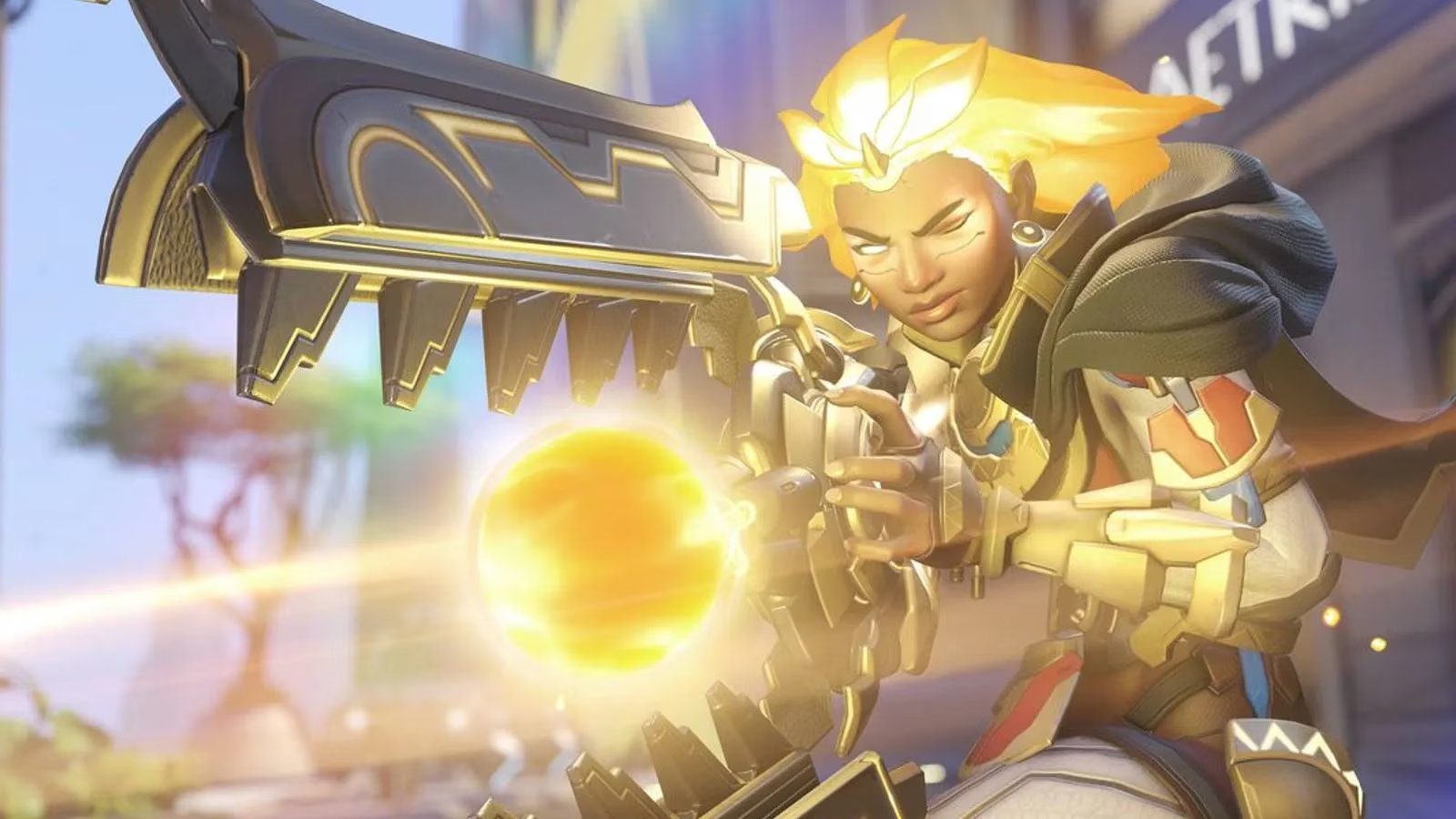
When Illari burst onto the scene in 2023, Blizzard made a calculated gamble: release her with significant offensive capability rather than taking the conservative approach they'd previously employed. She arrived like a summer heatwave—impossible to ignore and making everyone sweat a little. This marked a dramatic shift from the tepid reception that greeted heroes like Lifeweaver, whose initial underpowered state left many players disappointed.
"She came in hot—literally and figuratively," as veteran players often joke, referencing both her sun-based abilities and her impact on the meta. This power-first strategy accomplished something crucial: it got players genuinely excited to try a support hero, a role that has historically struggled with popularity compared to the more glamorous damage category.
Redefining Support Heroes
Prior to Illari, support heroes in Overwatch often faced a challenging existence. They were expected to heal and enable their team while frequently becoming priority targets with limited self-defense options. The frustration of being a "helpless healer" had driven many players away from the role entirely.
Illari changed that narrative by showcasing how a support hero could deliver substantial healing while also commanding respect through offensive capability. Her Solar Rifle and healing abilities struck a balance that made her feel impactful regardless of team composition.
The Balancing Act Timeline
Blizzard's approach with Illari introduced another innovation: the deliberate balancing timeline. Rather than launching her in a state of perfect equilibrium (which is nearly impossible to achieve), they intentionally gave her room to shine for several weeks before implementing targeted adjustments.
This strategy served multiple purposes:
-
✨ Players had time to develop genuine attachment to the character
-
📊 Developers collected robust data on her performance across skill levels
-
🔍 The community identified specific aspects that needed adjustment rather than dismissing the hero entirely
The results speak for themselves. Three years later, Illari maintains a healthy pick rate and player satisfaction score, something several pre-Illari heroes still struggle to achieve.
The Ripple Effect
The "Illari Effect," as it's now known in gaming circles, has influenced not just Overwatch 2 but the broader competitive gaming landscape. Multiple titles have adopted similar approaches to character introductions, recognizing that player excitement and engagement often stem from feeling powerful rather than perfectly balanced from day one.
Subsequent Overwatch 2 heroes have followed this template with notable success. The introduction of heroes like [redacted for recency] and [redacted for recency] in 2025 demonstrated Blizzard's commitment to this philosophy, with both characters enjoying strong debuts before receiving measured adjustments.
The Double-Edged Solar Sword
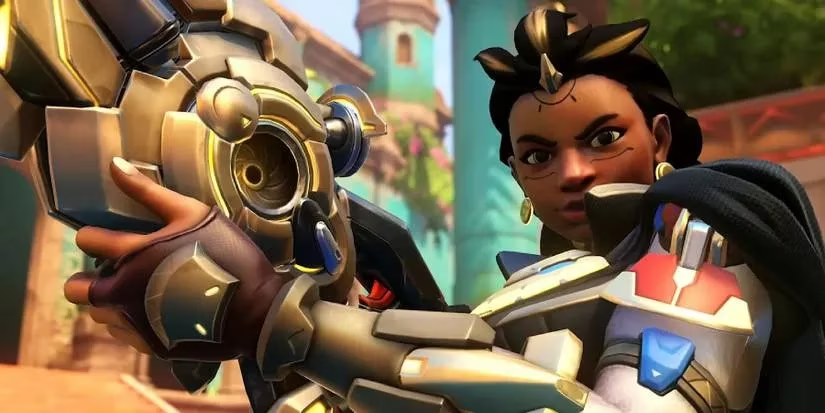
This approach isn't without risks, however. Players on the receiving end of a powerful new hero can feel frustrated or disadvantaged. The key has been Blizzard's transparency about their intentions and timeline. By communicating clearly that new heroes will receive balance adjustments after an initial evaluation period, they've managed to set appropriate expectations.
As one professional player noted during last month's Overwatch World Cup 2026: "We've all just come to accept that when a new hero drops, you either play them or play around them for a few weeks. And honestly? That's kinda exciting. Shakes things up."
Beyond Power: Character Integration
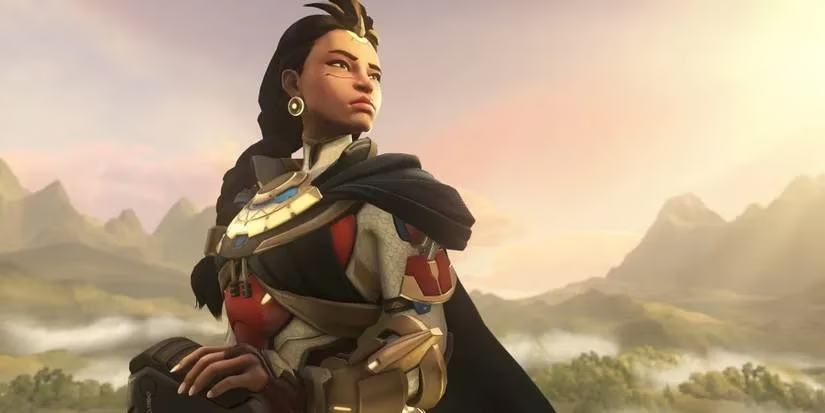
Illari's success wasn't solely about her mechanical strength. Her integration into the world of Overwatch through compelling lore, cultural representation, and visual design all contributed to player reception. The Peruvian support hero brought with her a rich backstory connected to the sun and healing traditions that resonated with players seeking deeper narrative connections.
This holistic approach to character introduction has become standard practice for Blizzard in 2026, with each new hero receiving substantial narrative development alongside their gameplay mechanics.
Looking Forward
As Overwatch 2 continues its journey in 2026, the lessons learned from Illari's introduction remain relevant. The development team has found that balance isn't just about numbers and mechanics—it's about player perception, excitement, and the emotional connection to new characters.
For competitive games with regular character additions, this represents a fundamental shift in philosophy: lead with excitement, follow with refinement. It's a lesson that cost Blizzard several underwhelming hero launches to learn, but one that has paid dividends in player engagement and satisfaction.
The next hero on the horizon is rumored to challenge conventions once again. If Blizzard's track record since Illari is any indication, players are in for another memorable addition to the ever-expanding Overwatch universe. And honestly? We can't wait to see what they've cooked up this time!
The Illari Principles: A Summary
For developers and players alike, the "Illari Principles" of new character introduction might be summarized as:
-
Prioritize player excitement over perfect balance
-
Ensure the character feels impactful in their designated role
-
Establish a clear timeline for post-launch evaluation and adjustment
-
Integrate mechanical design with narrative and aesthetic elements
-
Communicate intentions transparently with the player base
These principles have transformed Overwatch 2's approach to character development and set a new standard for competitive games everywhere—proving that sometimes, making a splash is more important than testing the waters.