
Illari's controversial role as a damage-dealing support in Overwatch 2 continues to spark fierce debate, challenging traditional support playstyles and reshaping the meta.
The debate around Illari, Overwatch 2's Peruvian support hero introduced back in 2023, continues to rage even in 2026. Three years after her debut, players still find themselves torn between admiration for her engaging playstyle and frustration when facing her on the battlefield. As one veteran player recently remarked during a competitive match, "Illari changed the support meta forever, and we're still feeling the aftershocks."
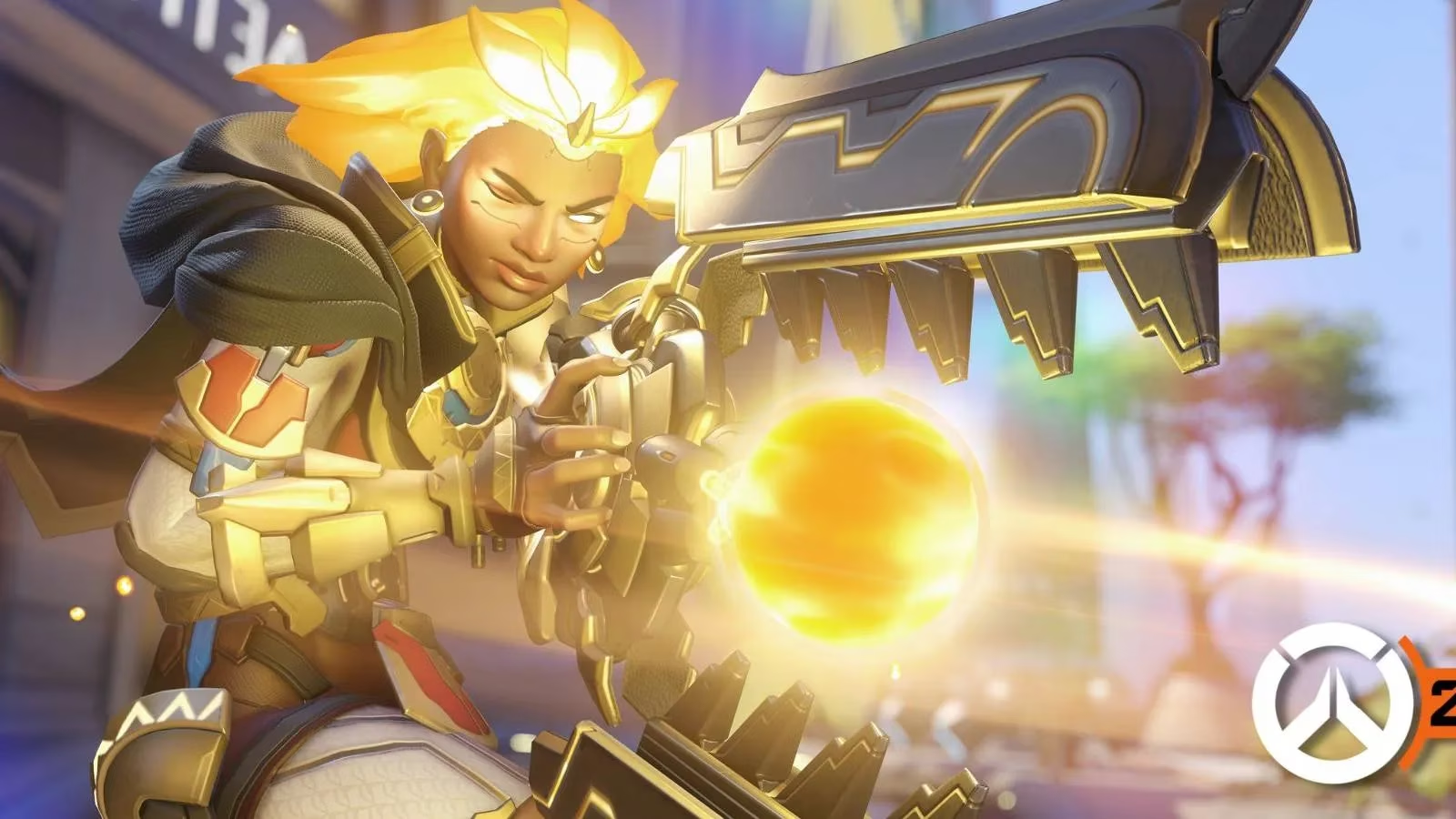
Blizzard's decision to maintain Illari's core mechanics through multiple seasons has created a fascinating case study in player adaptation. While her kit has received several adjustments since her introduction—particularly to her Captive Sun ultimate and Healing Pylon—her fundamental identity as a damage-dealing support remains intact. "It's not just about healing anymore," explains professional Overwatch League player KarQ during a recent tournament. "Supports like Illari have redefined the role. You're expected to secure kills while keeping your team alive."
The controversy surrounding Illari touches on a fundamental question that has haunted Overwatch since its inception: how much damage should support heroes be allowed to deal? This debate intensified when Overwatch 2 shifted from 6v6 to 5v5 gameplay, removing one tank position and forcing supports to become more self-sufficient.
"Remember when support meant you just pocketed your DPS?" laughs former Overwatch League champion Space. "Those days are long gone. Now you've got Illari players outdueling Widowmakers."
Her Solar Rifle remains one of the most potent weapons in a support hero's arsenal. As a hitscan weapon with considerable damage output, it allows skilled players to eliminate threats at medium range—a capability that continues to frustrate DPS mains who feel their role is being encroached upon.
The Pylon Problem
Illari's Healing Pylon represents another point of contention among the player base. This deployable turret provides consistent healing to teammates within its range, allowing Illari to focus on damage dealing while still fulfilling her support responsibilities.
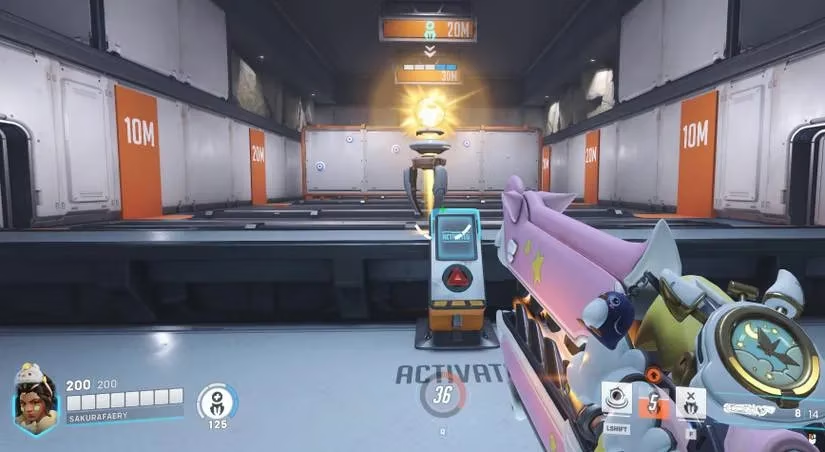
"The pylon is what separates good Illari players from great ones," notes Overwatch content creator Stylosa. "Placement is everything. Put it somewhere obvious, and it'll be destroyed immediately. Hide it well, and it provides incredible value throughout a fight."
This mechanic has exposed an interesting weakness in the Overwatch community, particularly at lower ranks. Many players simply ignore the pylon, allowing it to provide uncontested healing throughout engagements. This phenomenon isn't unique to Illari—heroes with deployable elements like Torbjörn and the former support-turned-DPS Symmetra have long exploited this tendency.
Coach Jake Lyon puts it bluntly during a recent stream: "If you're not shooting the pylon, you're playing into Illari's hands. It's that simple."
The statistics back this up. According to Overbuff's 2026 data:
| Rank Tier | Average Pylon Uptime | Win Rate |
|---|---|---|
| Bronze | 78% | 57.2% |
| Gold | 62% | 53.1% |
| Diamond | 41% | 49.8% |
| Masters+ | 32% | 48.3% |
The correlation is clear—as players get better at destroying the pylon, Illari's effectiveness diminishes.
Adapting to the Meta
Despite calls for further nerfs, many high-level players argue that Illari is in a relatively balanced state in 2026. "She's strong, but counterable," explains Overwatch League analyst Custa. "The problem isn't Illari—it's that players don't want to adapt their playstyle to deal with her."
This sentiment is echoed across professional circles. The key to neutralizing an enemy Illari lies in targeting her pylon and pressuring her directly. Without her healing turret, Illari becomes significantly more vulnerable and less effective at supporting her team.
Some heroes have emerged as particularly effective counters:
-
🔫 Sombra: Can hack the pylon, temporarily disabling it
-
💥 Junkrat: Excels at destroying the pylon with splash damage
-
🏹 Hanzo: Can eliminate the pylon from safe distances
-
🛡️ Winston: Can dive Illari directly and disrupt her positioning
"It's a classic case of 'git gud,'" chuckles former pro player Seagull during a recent tournament commentary. "Instead of complaining about Illari being OP, maybe try shooting her pylon first?"
The Future of Support Design
As Overwatch 2 continues to evolve in 2026, Illari's design philosophy has influenced newer support heroes. The line between damage dealer and healer has become increasingly blurred, with recent additions focusing on utility and playmaking potential rather than pure healing output.
"Illari was just the beginning," says game director Aaron Keller in a recent developer update. "We've learned that players enjoy supports who can make impactful plays beyond just healing. Finding that balance is our ongoing mission."
For casual players struggling against Illari, the advice from professionals remains consistent: prioritize destroying her pylon, contest her positioning, and don't allow her free reign in the backline. With her cooldowns exposed, Illari becomes significantly less threatening.
As one Grandmaster player succinctly puts it: "Respect her damage, destroy her utility, and suddenly that 'OP' Illari doesn't look so scary anymore."
Whether you love her or hate her, Illari has undeniably left her mark on Overwatch 2. As the game continues to evolve, her place in the support roster serves as a reminder that adaptation and counter-play remain at the core of the Overwatch experience. The sun may be captive in her ultimate, but in the hands of a skilled player, Illari's potential remains radiant in 2026.