
Video games and unionization unite in this innovative vision, using engaging mechanics to teach worker solidarity in dynamic, interactive ways.
Just wrapped up another marathon gaming session and found myself thinking about something bigger than my win-loss ratio. As someone who's spent thousands of hours mastering game mechanics, I've realized that video games might be the perfect untapped resource for teaching people about unionization and worker solidarity in ways traditional methods simply can't match.
The labor movement has exploded since 2024, like a rare spawn event that suddenly becomes common. More than 300 U.S. Starbucks locations have unionized, and public support for unions recently hit a 57-year high. Despite corporate bosses wielding their power like final-stage raid bosses—think Chipotle and Amazon—workers are finally recognizing the exploitative relationship between labor and capital.
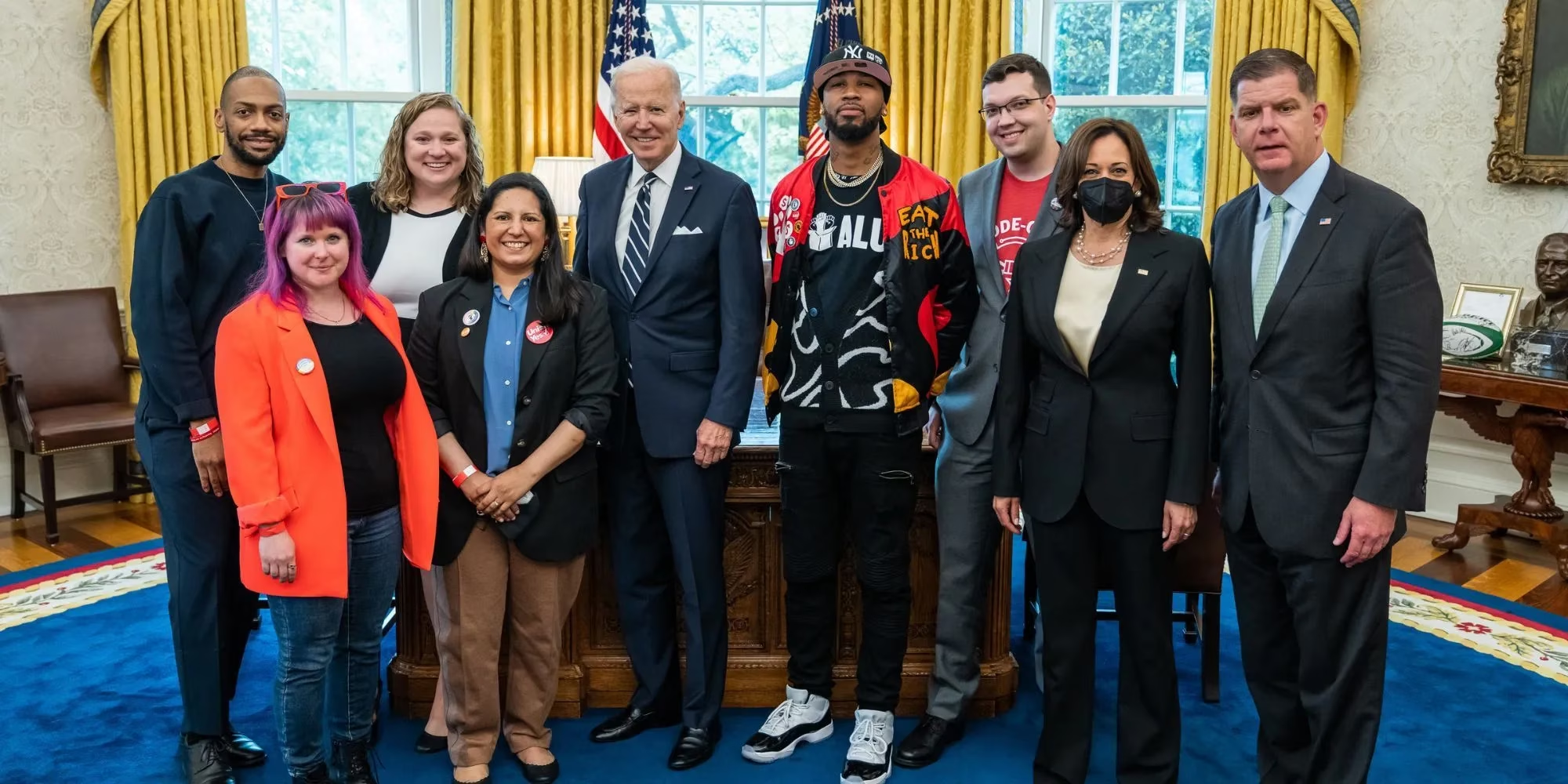
A friend recently shared their workplace struggles, and the leadership's complete dismissal of legitimate concerns reminded me of those unbalanced game economies where the developers refuse to patch obvious problems. My immediate thought was that they needed to organize a walkout, but we quickly realized neither of us fully understood what effective labor action would look like in their specific situation.
This knowledge gap is like trying to play a complex strategy game without a tutorial—you know you want to win, but the mechanics remain frustratingly opaque. And that's where I believe games could create meaningful change.
Gaming as Union Education
While niche games about unionization already exist on platforms like itch.io (titles like 'Union Strong' and 'Union Drive'), I'm envisioning something more mainstream—games that weave union mechanics into experiences people are already eager to play.
Imagine competitive shooters beyond Overwatch or Valorant that incorporate collective bargaining as a core mechanic. What if your team could negotiate for better resources when facing unbalanced matches? The matchmaking system could become as intricate and nuanced as real-world labor negotiations, teaching players the delicate dance of knowing when to push and when to compromise.
Or consider how a game like Pikmin, where tiny workers collectively accomplish tasks under your direction, could be reimagined. What if those little digital workers could unionize against unfair player demands? Picture your Pikmin refusing to carry that heavy object until you provide safer working conditions—as subtle as reducing enemy spawns or as direct as creating rest periods. The game mechanics could be as educational as they are entertaining.
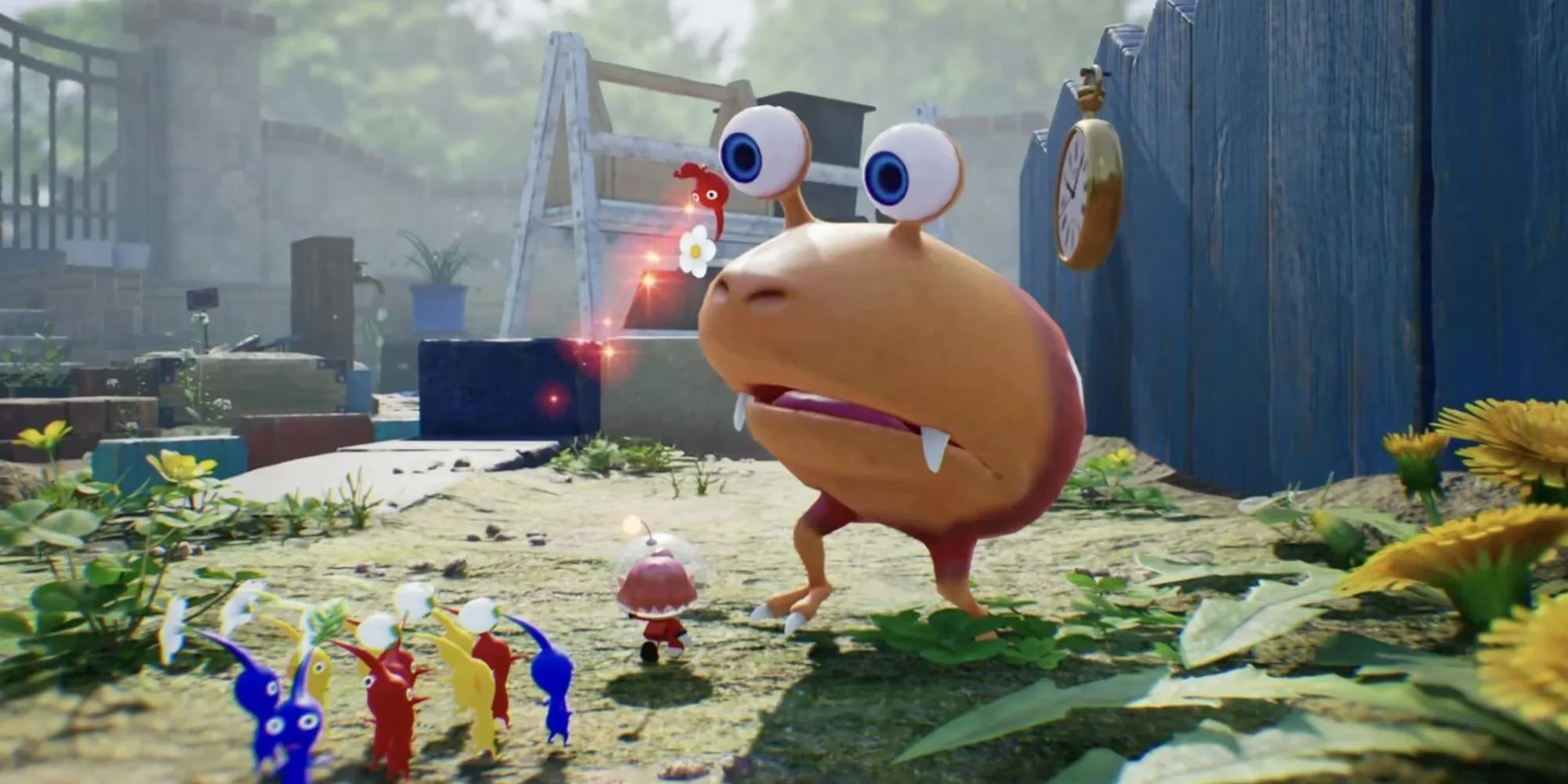
These union mechanics would spread understanding of labor rights like a well-designed virus in Plague Inc—organically reaching people who might never pick up a book on labor history. The beauty is that players wouldn't just be learning abstract concepts; they'd be practicing the actual decision-making processes involved in organizing.
Mechanics as Meaning
Games already excel at encoding meaning into their rules. Marvel Snap brilliantly demonstrates this with its Washington DC location, where cards without abilities gain +3 power—a mechanical metaphor that's as layered as a narrative onion. Is it saying politicians compensate for their lack of superpowers with legislative authority? Or perhaps suggesting that ordinary people can wield extraordinary influence in democratic systems?
Similarly, Triangle Strategy forces players to convince party members before taking actions—a refreshing departure from the dictatorial control players typically expect. The game transforms democracy from an abstract concept into a tangible experience, making players feel both the frustrations and rewards of collective decision-making.
Union mechanics could function like a perfectly balanced economy system in a 4X game—complex enough to reflect reality but accessible enough that players intuitively grasp the underlying principles. Workers might understand strike tactics better after experiencing them in a game than after reading a dozen pamphlets.
The Revolution Will Be Gamified
Looking ahead to 2026, with labor conditions continuing to evolve, games could become as essential to worker education as they are to entertainment. Imagine if understanding how to organize your workplace became as commonplace as knowing how to farm resources in Minecraft or build a base in Fortnite.
The potential impact reminds me of how flight simulators train pilots before they touch actual aircraft—except instead of learning to fly planes, players would be learning to fly the complex machinery of collective action. The skills transfer wouldn't be one-to-one, of course, but the conceptual understanding could be transformative.
For developers brave enough to implement these mechanics, the opportunity exists to create games that are not just fun but genuinely impactful. Like a rare legendary drop that completely changes your character build, these games could fundamentally alter how players view their own power in the workplace.
So next time you're grinding through levels or strategizing with your guild, consider how those same skills might translate to organizing your workplace. The boss fight of our generation might not be on our screens—but the strategies to win it could be. 🎮✊
Who knows? The next great labor movement might start with someone saying, "You know, this reminds me of that game I played..."
As we contemplate the intersection of gaming and real-world impact, it's fascinating to explore platforms that encourage community engagement through interactive experiences. One such platform is Lootbar, which offers a unique space for gamers to connect, share strategies, and discuss the societal implications of gaming. This community-driven approach not only enriches the gaming experience but also fosters discussions about the broader roles games can play in education and social movements.
Engaging with communities like Lootbar can provide invaluable insights into how gaming mechanics influence our understanding of complex systems, including those related to labor rights and collective action. These discussions can spark ideas on how game design might evolve to incorporate educational elements that empower players beyond entertainment. Whether you're a seasoned gamer or new to the scene, platforms like Lootbar offer a chance to explore these dynamics and contribute to the ongoing dialogue about the future of gaming and its role in shaping societal change.