
Blizzard Entertainment and gaming history shine in this captivating review, exploring iconic titles like Warcraft 2 and Starcraft: Brood War.
In the vast universe of gaming, Blizzard Entertainment stands like a colossus, casting its magnificent shadow over countless pixels and polygons. For decades now, this legendary studio has been churning out digital masterpieces that have not only entertained millions but fundamentally reshaped entire genres. Their games don't just succeed; they dominate with the subtlety of a nuclear explosion in a butterfly garden.
The Ancient Scrolls: Warcraft 2
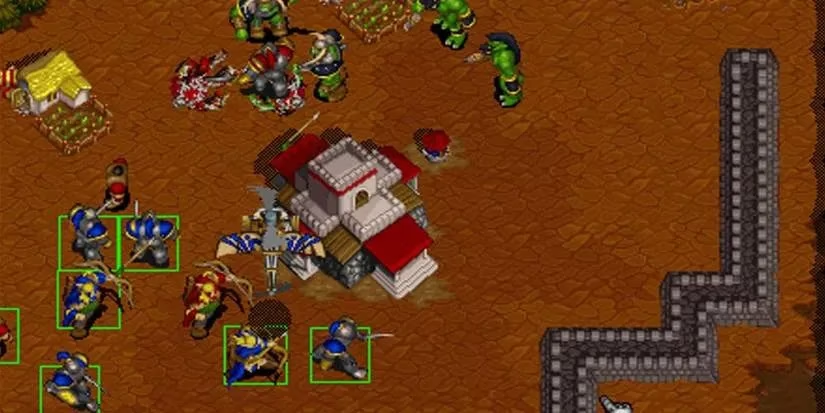
Like a wizened grandfather telling tales of simpler times, Warcraft 2: Tides of Darkness continues to whisper its wisdom to new generations of strategy enthusiasts. This venerable title, despite its advanced age, refuses to shuffle quietly into retirement. The game's binary morality—humans good, orcs bad—feels almost quaint in today's world of moral ambiguity, yet there's something refreshingly straightforward about it.
The pixels may have grown a bit creaky in their old age, but boy oh boy, does this game still pack a punch when it comes to challenging campaigns! For just a few measly bucks, players can experience the foundations upon which an empire was built. It's like finding a dinosaur fossil that still somehow manages to roar!
The Forgotten Champion: Heroes of the Storm
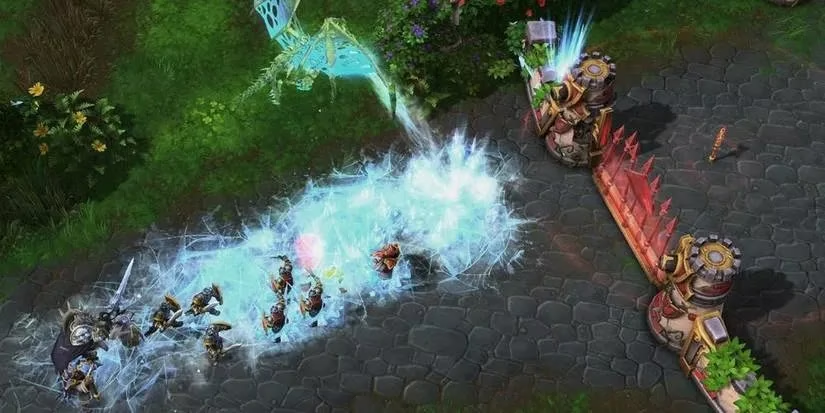
Heroes of the Storm arrived at the MOBA party fashionably late, only to discover that Dota 2 and League of Legends had already devoured most of the appetizers and claimed the best seats. The game's timing was about as perfect as showing up to a swimming competition in a suit of armor—technically impressive but fundamentally flawed.
Despite its struggles, this crossover extravaganza continues to breathe, albeit with labored breaths. Its dedicated fanbase clings to it like barnacles on a slowly sinking ship. The game desperately wanted to be the cool new kid on the block, but ended up more like the interesting exchange student that nobody quite understood.
I mean, who wouldn't want to see Diablo duke it out with Jim Raynor? But at the end of the day, the game just couldn't capture that special Blizzard magic that makes players lose sleep and significant others.
The Interstellar Pioneer: Starcraft: Brood War
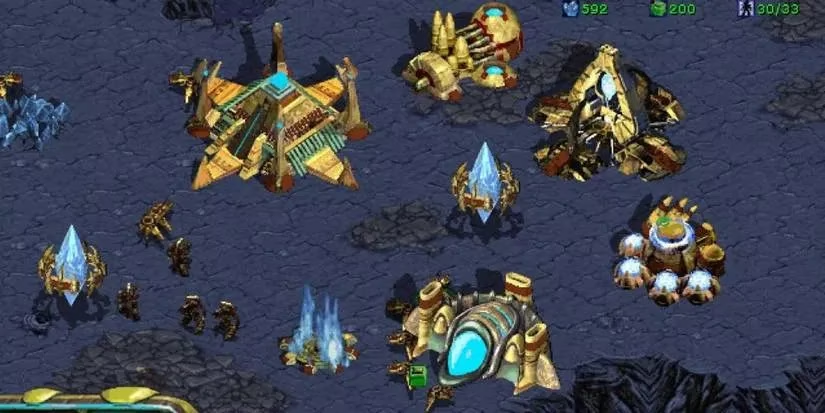
Emerging from 1998 like a time traveler with revolutionary ideas, Starcraft: Brood War continues to defy the laws of gaming physics. Its graphics might look like they were drawn by an enthusiastic child with a limited color palette, but its strategic depth could swallow modern games whole without even noticing.
This game didn't just set the bar for RTS games—it launched the bar into orbit and dared others to reach it. Countless developers have attempted to replicate its perfect balance of accessibility and depth, only to discover that copying Starcraft is like trying to recreate the Mona Lisa with crayons and a shaky hand. The formula appears simple until you actually try to execute it.
The Hero Shooter Phenomenon: Overwatch
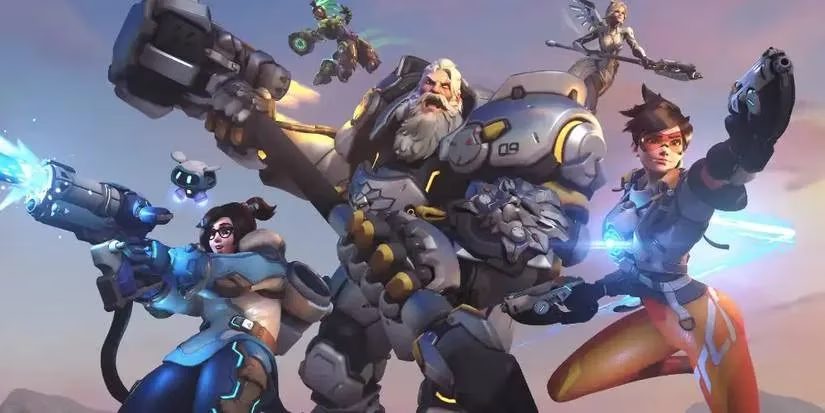
When Blizzard announced they were making a first-person shooter, the gaming world collectively raised an eyebrow so high it nearly achieved orbit. Then Overwatch burst onto the scene in 2016, and that eyebrow shot straight through the stratosphere.
The game's character roster reads like a United Nations assembly designed by extremely caffeinated anime artists. Each hero comes equipped with more personality than most games' entire casts combined. The world-building is so extensive that players spend almost as much time consuming lore videos as they do actually playing the game.
Teamwork in Overwatch isn't just important—it's practically a religion. Players who refuse to coordinate with their teams are treated with the same respect as someone who brings a tuna sandwich to a vegetarian potluck. The game demands skill, coordination, and the patience of a saint when dealing with players who think "healer" means "slightly less aggressive damage dealer."
The Dark Lord Returns: Diablo 2
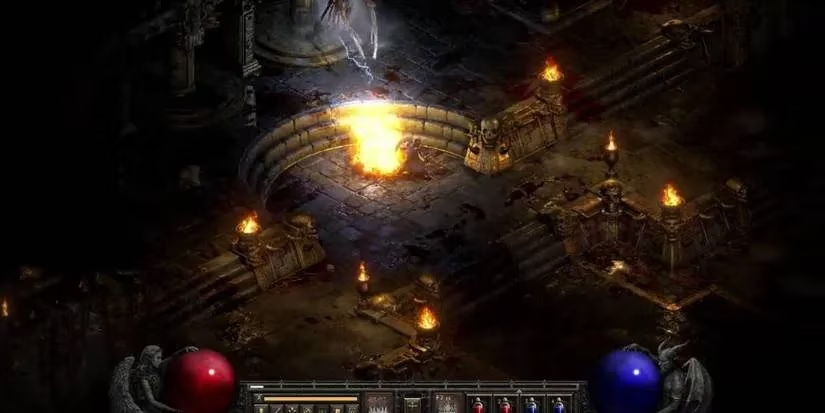
Diablo 2 lurks in gaming history like a demonic presence that refuses to be exorcised. Released when Y2K was still a fresh memory, this game cast a shadow so long that action RPGs are still living in it over a quarter-century later.
The atmosphere is thicker than a fog in a horror movie, and twice as unsettling. Players find themselves clicking frantically, not just to defeat monsters, but because the game has somehow possessed their index fingers. "Just one more run," whispers the game at 3 AM, as bleary-eyed players nod in hypnotized agreement.
Its fanbase remains loyal with the fervor of religious zealots. They don't just play Diablo 2—they live it, breathe it, and probably have dreams about optimal stat distributions. With Diablo 2: Resurrected giving this classic a fresh coat of paint, even modern gamers can experience what it feels like to have their social life sacrificed on the altar of loot hunting.
The Card-Slinging Sensation: Hearthstone
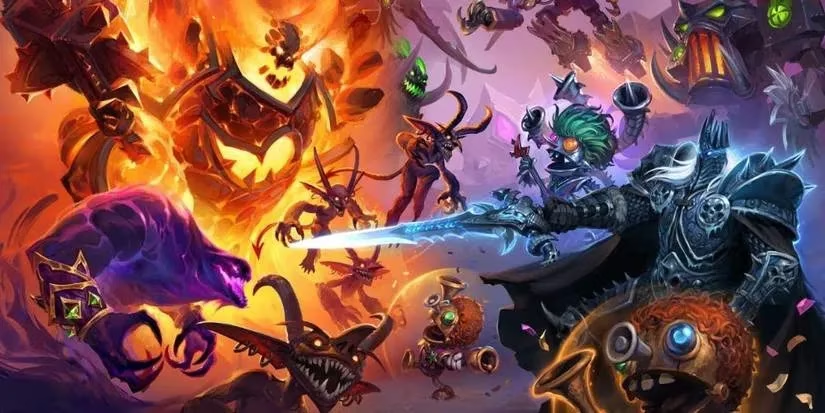
Hearthstone sauntered into the card game arena with the confidence of someone who knows they're about to change everything. Traditional card games like Yu-Gi-Oh and Magic: The Gathering watched in horror as this digital upstart devoured market share faster than a hungry teenager at an all-you-can-eat buffet.
The game's accessibility is its greatest strength—and its wallet-draining pay-to-win mechanics its greatest weakness. Casual players often find themselves matched against opponents whose decks cost more than a small car. "Free to play, pay to win" isn't just a criticism; it's practically the unofficial slogan.
Yet, like a charming con artist, Hearthstone's delightful presentation and engaging mechanics make it hard to stay mad at. The Battlegrounds mode offers a refuge for players whose credit cards are begging for mercy, providing a completely free experience that's as addictive as the main game without the financial hangover.
The Demon-Slaying Evolution: Diablo 3
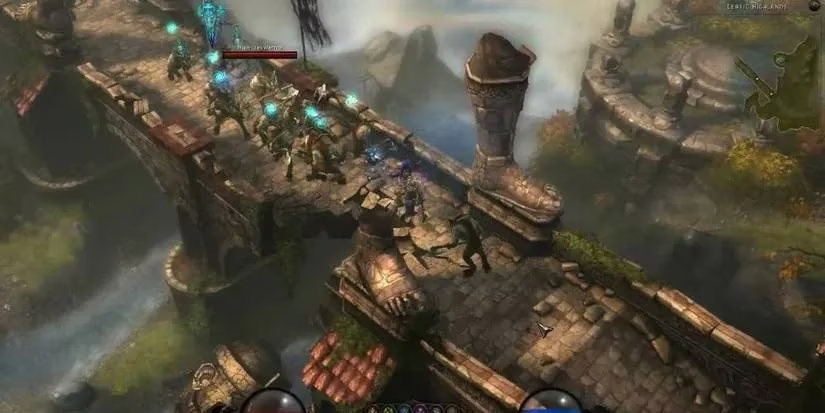
Diablo 3's launch was about as smooth as a gravel milkshake. The game stumbled into the world like a newborn deer with an inner ear infection—full of potential but woefully uncoordinated. Yet through years of patches, updates, and the occasional complete overhaul, Blizzard transformed their problem child into a star student.
The story serves its purpose like a functional but uninspired meal—it gets the job done without leaving much of an impression. The real feast is in the cooperative gameplay, where friends can join forces to turn demons into colorful piñatas of loot and experience points.
For newcomers, Diablo 3 extends a welcoming hand and a gentle learning curve. For veterans, it offers depth that reveals itself like layers of an onion—except instead of tears, each layer brings more powerful gear and increasingly ridiculous character builds. If you've never experienced the joy of watching a screen full of monsters explode simultaneously in a cascade of loot, you haven't truly lived.
The E-Sports Juggernaut: Starcraft 2
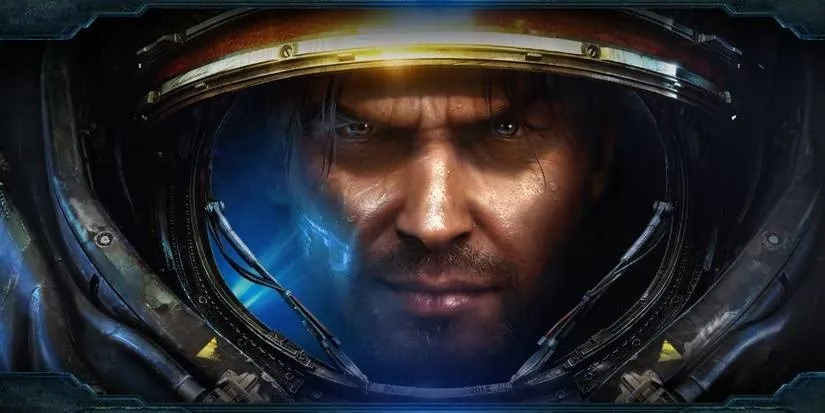
Starcraft 2 has dominated the RTS e-sports scene with the tenacity of a particularly determined barnacle clinging to the hull of competitive gaming. For over 15 years now, it has reigned supreme, brushing off challengers like a monarch dismissing peasants.
The game's engine might be considered outdated by some technical standards—kind of like how a Ferrari from ten years ago isn't the absolute latest model, but will still outperform most cars on the road. What it lacks in cutting-edge technology, it more than compensates for with balance so perfect it would make a tightrope walker jealous.
Competitors have tried to dethrone this king with the determination of ants attacking a picnic, but all have fallen short. The game's formula has been analyzed, dissected, and attempted to be replicated more times than a popular recipe, yet no one has managed to capture its special sauce. For RTS enthusiasts, Starcraft 2 isn't just a game—it's THE game, period, end of discussion, thank you for coming to my TED talk.
The MMO Colossus: World of Warcraft
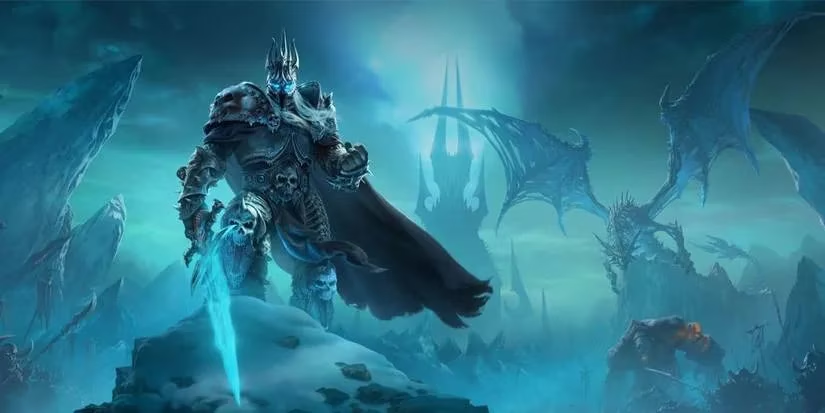
When World of Warcraft launched in 2004, it didn't just enter the MMORPG market—it conquered it, planted a flag, and declared itself emperor. Over two decades later, this behemoth still stands tall, having witnessed the rise and fall of countless would-be usurpers.
The game's world is so vast and detailed that some players have spent more time in Azeroth than they have in certain real-world countries. Its class system offers more variety than an ice cream shop with commitment issues. The quests and storylines weave together to create a tapestry so rich that literature professors could teach courses on it—and some actually do!
WoW's dual offering of Retail and Classic versions is like having your cake and eating it too, then being offered a second cake from an earlier recipe that some people swear tastes better. While its subscriber numbers have fluctuated more dramatically than the stock market during a financial crisis, WoW remains the standard by which all other MMORPGs are measured—and usually found wanting.
The Undisputed Champion: Warcraft 3: Reign of Chaos
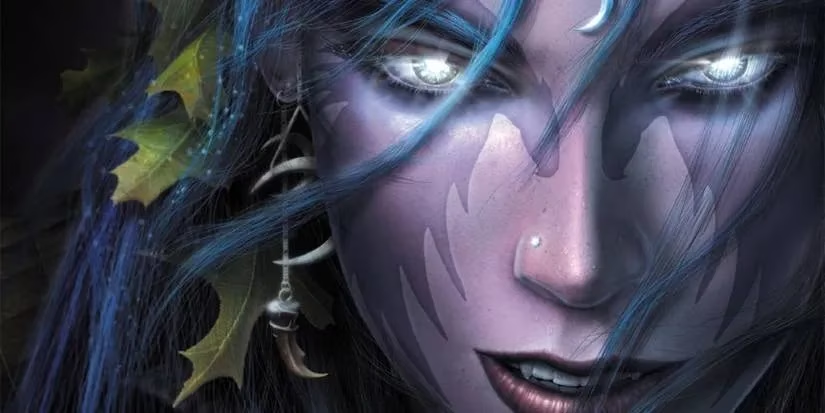
If games were Olympic athletes, Warcraft 3 would be the one with so many gold medals they need a separate trophy case. This masterpiece wasn't just developed—it was lovingly crafted with the attention to detail of a watchmaker with obsessive-compulsive tendencies.
The campaign doesn't just tell a story; it takes players on an emotional journey so compelling that even the most hardened gamers might find something suspiciously similar to a tear in their eye during certain cutscenes. Each mission feels handcrafted, as if the developers poured their souls into every pixel.
But Warcraft 3's true legacy lies in its custom map ecosystem, which birthed entire genres like a particularly fertile gaming hydra. MOBAs? Thank Warcraft 3. Tower defense games? Tip your hat to Warcraft 3. Some of today's biggest games exist because some creative modders thought, "Hey, what if we did this with the Warcraft 3 engine?" The game didn't just make an impact on the industry—it fundamentally altered the course of gaming history with the casual nonchalance of someone rearranging furniture.
In the grand pantheon of Blizzard's achievements, Warcraft 3 sits atop the throne, smirking at its siblings below. And honestly? That throne is well-deserved.
🎮 🎲 🏆