
Activision Blizzard and NetEase's partnership collapse has devastated the Chinese gaming market, leaving millions of gamers in turmoil.
In a stunning development that has sent shockwaves through the global gaming landscape, the once-mighty partnership between Activision Blizzard and Chinese gaming titan NetEase has spectacularly imploded. This catastrophic dissolution, now entering its final death throes in 2026, continues to reverberate throughout the industry years after the initial separation that left millions of Chinese gamers abandoned in digital limbo.
The Dramatic Fallout
The gaming world watched in absolute horror when, back in late 2022, Activision Blizzard's 14-year marriage with NetEase—a partnership that had been the cornerstone of Western gaming's presence in the lucrative Chinese market—suddenly announced its divorce. The breakup was MESSY. It was UGLY. It was the gaming equivalent of watching a supernova collapse into a black hole.
Blizzard China, in what can only be described as a desperate Hail Mary pass, claimed it had reached out to NetEase with a proposal to extend their dying relationship for a measly six months while it frantically searched for a replacement partner. NetEase, however, responded with what industry insiders describe as the corporate equivalent of an eye-roll, unceremoniously declining the offer through a terse statement on Weibo. The rejection was swift. Brutal. Final.
The Casualties of Corporate Warfare
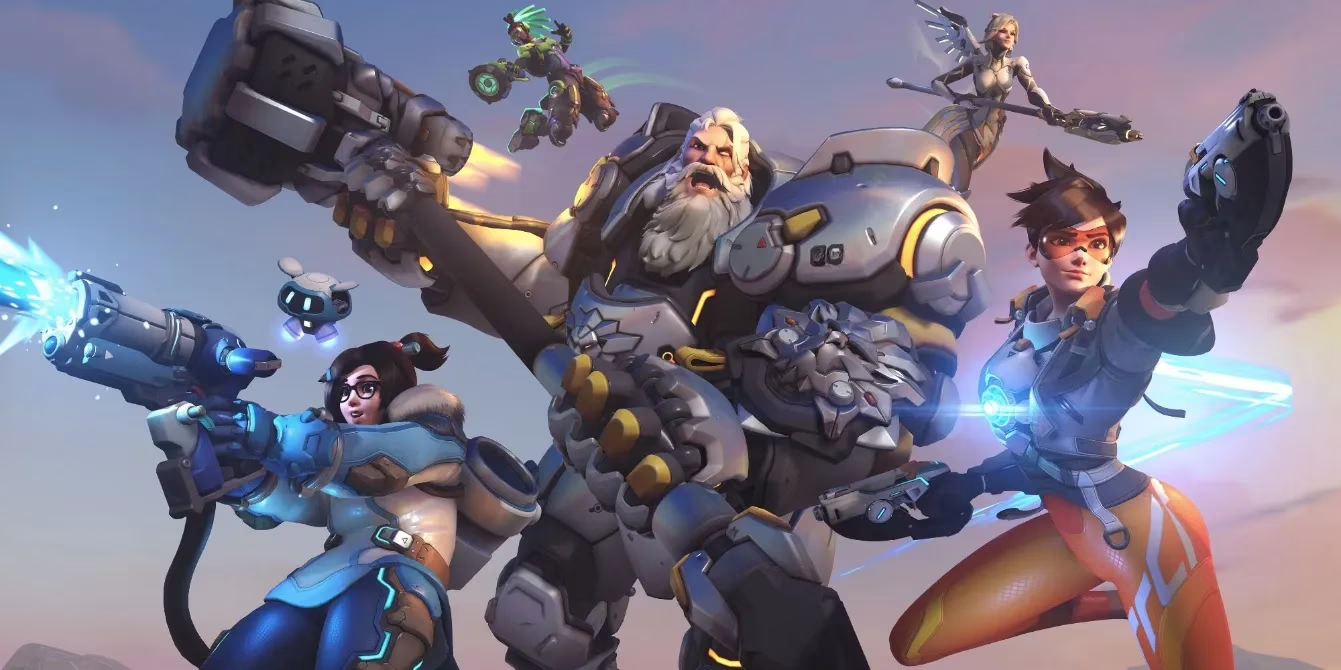
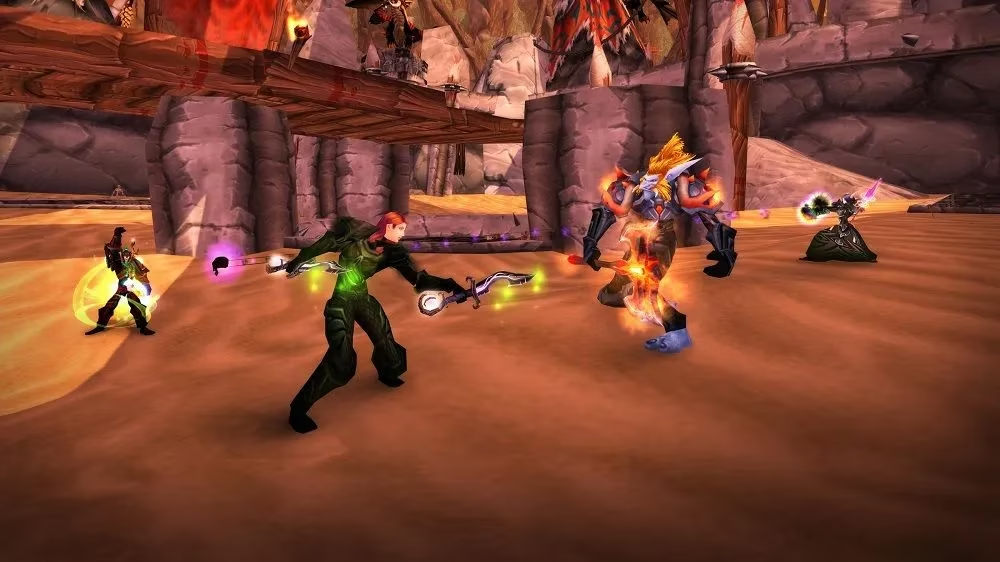
The consequences? DEVASTATING. Seven beloved Blizzard titles—including the cultural phenomena World of Warcraft, Overwatch, and Hearthstone—vanished from the Chinese digital landscape on January 23, 2023. Millions of players lost access to their virtual lives, characters, and communities they had spent years building. NetEase, meanwhile, didn't waste a single precious second before dismantling the teams that had overseen these games, scattering developers to the winds like digital refugees.
A Tale of Irreconcilable Differences
The collapse of this once-unshakeable alliance wasn't just business—it was PERSONAL. NetEase CEO William Ding, in what observers described as a barely contained fury, claimed his company had "put in a great deal of effort" to salvage negotiations. But those negotiations crashed against the immovable rocks of "material differences" and terms that NetEase found utterly unacceptable.
Blizzard, with characteristic corporate melodrama, countered that the companies simply couldn't forge a deal "consistent with Blizzard's operating principles and commitments to players and employees"—a statement that industry analysts have since labeled as "breathtakingly disingenuous."
The Power Dynamics of Global Gaming
The aftermath has been nothing short of APOCALYPTIC for both parties:
-
🔥 NetEase lost a significant revenue stream that had helped propel it to become China's second-largest gaming company
-
💣 Activision Blizzard surrendered access to the world's largest gaming market
-
😱 Millions of Chinese players lost their digital identities and communities overnight
-
💔 Hundreds of developers found themselves suddenly unemployed
The collapse illuminated the precarious nature of international gaming partnerships in China, where foreign companies must dance with local partners to access the market. This arrangement, once the golden ticket to billions in revenue, proved to be built on foundations of sand.
The Current State in 2026
Four years after the dramatic split, the gaming landscape in China has been permanently altered. Smaller Chinese developers have rushed to fill the void left by Blizzard's departure, creating homegrown alternatives to the Western giant's portfolio. Some have succeeded spectacularly; others have failed miserably.
Activision Blizzard, after years of stumbling through partnerships with smaller Chinese firms, has never recaptured its former glory in the region. The company's market share has dwindled to a fraction of its former dominance, with competitors eagerly carving up the abandoned territory.
What This Means for the Future
The Blizzard-NetEase divorce stands as a cautionary tale of corporate hubris and the dangers of dependency. Industry experts now point to this catastrophic breakup as a watershed moment that fundamentally changed how Western gaming companies approach the Chinese market:
-
Shorter-term partnerships with multiple companies rather than exclusive long-term deals
-
Increased focus on technology transfer to ensure continuity in case of partnership dissolution
-
Emergency protocols for players to preserve their digital assets during transitions
-
More favorable revenue-sharing models to prevent partner dissatisfaction
As we move through 2026, the scars of this corporate war remain visible on the landscape of global gaming. Players who lost their digital lives still speak of the "Blizzard Blackout" with bitterness. Former NetEase developers who worked on Blizzard titles have scattered across the industry, carrying with them the lessons of corporate fragility.
In the end, what was once unthinkable became inevitable. The mighty fell. The partnership crumbled. And in the dust of their collapse, a new, more cautious era of international gaming collaboration emerged—one built on the painful lessons of what happens when gaming giants go to war.
The Blizzard-NetEase saga wasn't just the end of a business arrangement; it was the spectacular implosion of an era. And as the dust continues to settle in 2026, one thing remains abundantly clear: in the high-stakes world of global gaming, even the mightiest empires can fall overnight.