
The gaming industry thrives on battle passes and monetization, with publishers like Ubisoft and Sony driving this lucrative, controversial trend.
The gaming industry continues to embrace battle passes as a standard monetization model, despite ongoing player resistance. This trend, which began in the late 2010s, has firmly cemented itself in the gaming ecosystem by 2026, with major publishers doubling down on these recurring revenue streams despite vocal community opposition.
Looking back at the Avatar: Frontiers of Pandora release from Ubisoft, which launched with both a season pass and premium currency packs, we can trace the moment when it became clear that battle passes were not a temporary trend but a permanent fixture. What seemed controversial in 2023 has now become standard practice across the industry.
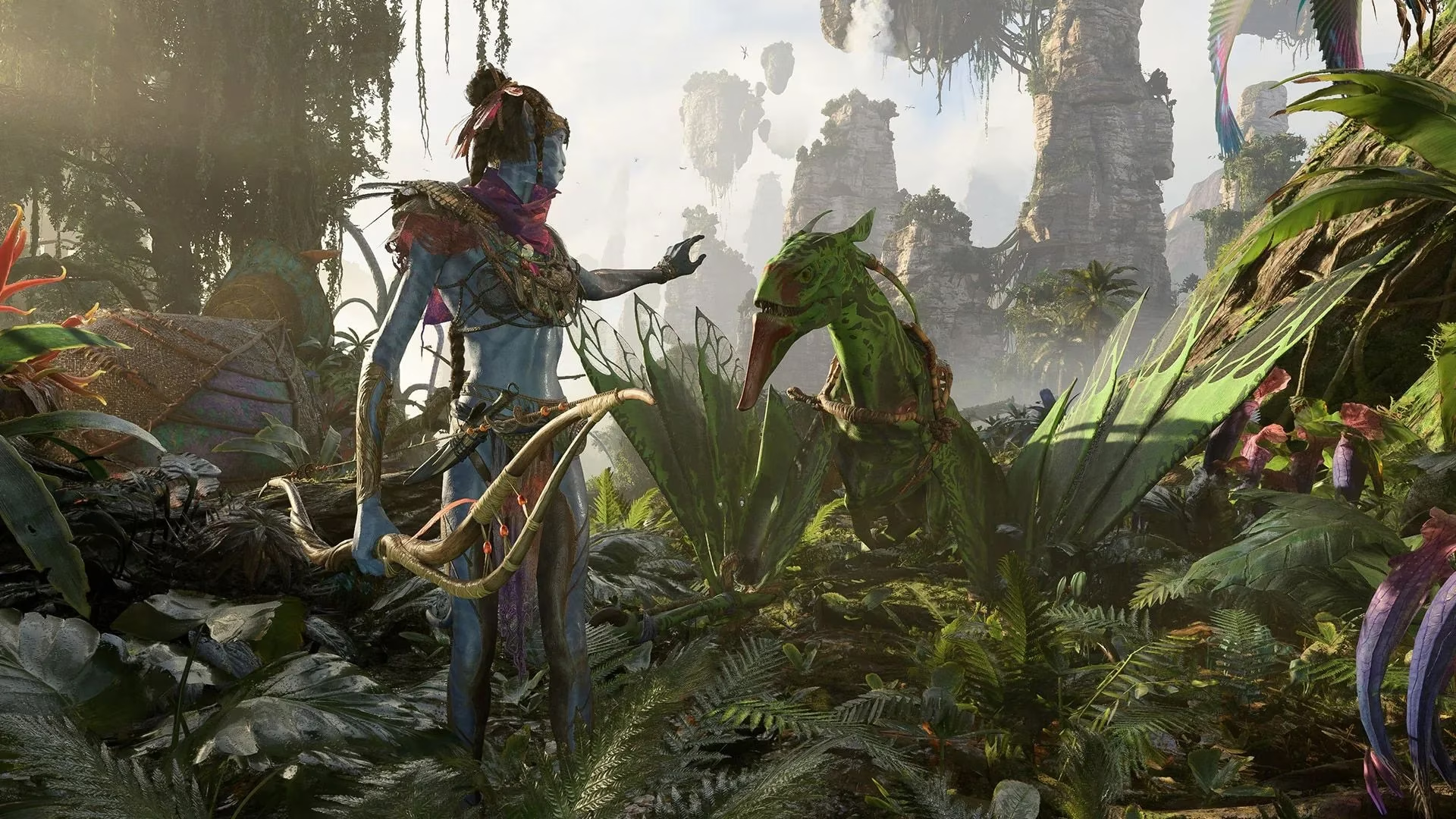
Ubisoft's decision to implement these monetization systems in a primarily single-player experience with limited multiplayer functionality signaled a turning point. Despite being one of the industry's most criticized publishers at the time and working with the divisive Avatar IP, Ubisoft pressed forward with live-service elements. Four years later, this approach has been validated by market performance, with players reluctantly accepting what they once vocally opposed.
The economics driving this trend remain unchanged in 2026. Game development budgets continue to expand, with AAA titles regularly exceeding $300 million in development costs. Publishers view the standard $70 price point (increased from $60 in the early 2020s) as insufficient to recoup these massive investments, particularly as development timelines stretch to 5-7 years for flagship titles.
Industry analyst Maria Chen explains: "The battle pass model provides predictable, recurring revenue that helps stabilize publisher finances in an increasingly volatile market. Players may complain, but engagement metrics tell a different story—battle passes work."
The Evolution of Battle Pass Implementation
Battle passes have evolved significantly since their early implementations. The 2023-era systems, which often featured time-limited exclusive content that could disappear forever, have given way to more player-friendly approaches in many games:
-
Permanent progression tracks that don't expire
-
Catch-up mechanics for players who join mid-season
-
Cross-game rewards that provide value across a publisher's portfolio
-
Customizable progression allowing players to focus on preferred content
Sony, once the champion of premium single-player experiences, has fully embraced the model. The Last of Us: Factions, which launched in 2024, not only included a battle pass but has since expanded to feature multiple concurrent progression tracks. The company's shift toward live service games has accelerated, though they continue to balance this approach with their traditional single-player offerings.
The Resistance Continues
Not all developers have surrendered to the battle pass model. Several high-profile studios continue to release complete experiences without recurring monetization:
| Studio | Recent Releases Without Battle Passes |
|---|---|
| FromSoftware | Elden Ring: Shadow Realm (2025) |
| Nintendo | Metroid Prime 4 (2024) |
| Larian Studios | Baldur's Gate 4 (2026) |
| Insomniac | Wolverine (2025) |
These exceptions prove that alternative business models remain viable, particularly for studios with established reputations and manageable development costs. Yet they increasingly represent the minority in the AAA space.
Consumer advocacy groups have continued their pushback against these monetization systems. The European Gaming Consumer Coalition successfully lobbied for transparency requirements in 2025, forcing publishers to disclose the expected time and financial commitment required to complete battle passes.
"The battle isn't about eliminating these systems anymore—that ship has sailed," says consumer advocate Jordan McKenzie. "Now we're focused on ensuring they're implemented ethically and transparently."
The Future Landscape
As we move into the latter half of 2026, the industry shows no signs of reversing course. If anything, battle passes have become more sophisticated in their psychological design, with publishers investing heavily in behavioral science to optimize engagement and spending.
The upcoming slate of major releases for late 2026 and 2027 almost universally includes battle pass systems:
-
Assassin's Creed: Neo Constantinople
-
Call of Duty: Modern Warfare IV
-
Grand Theft Auto Online 2.0
-
Destiny 3
-
Dragon Age: Veilguard
Even traditionally single-player franchises have incorporated battle pass elements. The Elder Scrolls VI, perhaps the most anticipated single-player RPG of the decade, includes a "Discovery Pass" that offers rewards for exploration and achievement completion—a battle pass in all but name.
For players, the reality has set in: battle passes are as fundamental to modern gaming as tutorials and achievements. The question is no longer whether they will exist, but how intrusive they'll be and what value they'll provide.
Industry veteran and game director Marcus Chen offers perhaps the most pragmatic perspective: "Players vote with their wallets. The data shows that while vocal minorities protest these systems, the silent majority not only accepts them but actively engages with them. Until that changes, battle passes aren't going anywhere."
As we approach 2027, it seems the battle over battle passes has ended not with their defeat, but with their quiet acceptance as an inevitable feature of the gaming landscape. 🎮💰